
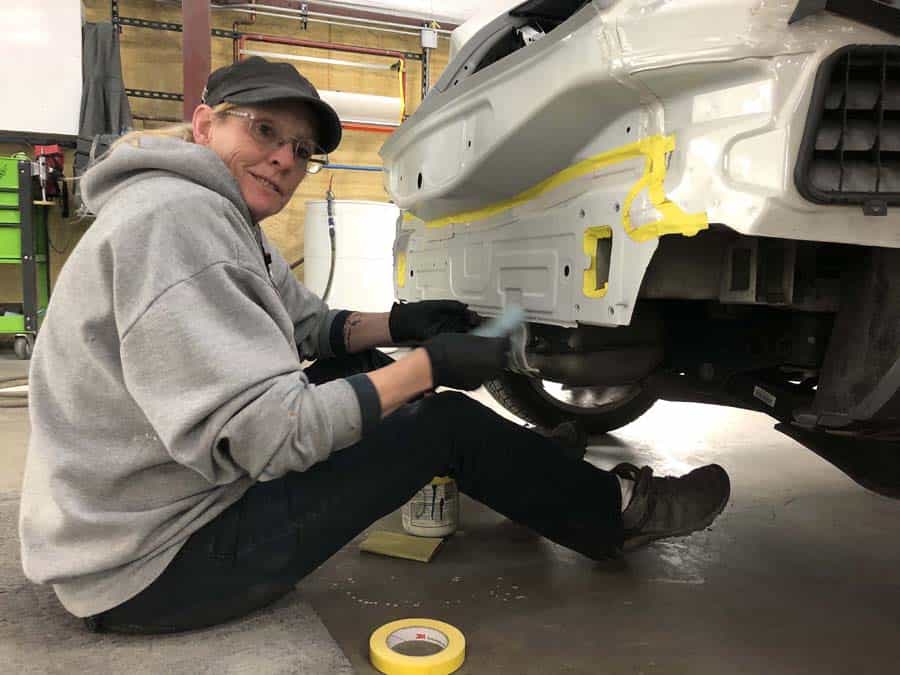
OSHA penalties can exceed $16,550 per violation and as much per day for every day the issue hasn’t been fixed by OSHA’s deadline
Lafayette, Colo.—Are collision shops doing the most they can to avoid the most common Occupational Safety and Health Administration (OSHA) citations?
According to a Top 10 guide by KPA, OSHA penalties can exceed $16,550 per violation and as much per day for every day the issue hasn’t been fixed by OSHA’s deadline. And the fine for a willful or repeated violation can be 10 times as much. This year, the maximum penalty for such a violation is $165,514.
KPA’s compliance experts identified the violations that appear most frequently in collision center inspections. Here’s what’s on the list:
- Respiratory Protection
- Hazard Communication
- Spray Finishing Using Flammable & Combustible Materials
- And seven more critical areas
KPA breaks down the Top 10 violations and what inspectors look for, as well as steps to keep shops protected. Here they are in brief.
No. 1 — Respiratory Protection
The OSHA standard requires facilities to determine appropriate respirators for various situations, ensure employees are medically evaluated and fit tested before use, and provide instruction on proper use, maintenance, and inspection procedures.
Respiratory Protection Violation Prevention Checklist
• Do you know if OSHA’s respiratory protection standards apply to your workplace?
• Do you have ALL required respiratory procedures documented?
• Do employees have access to adequate medical treatment?
• Are all employees trained on respirator procedures?
• Are the right respirators available?
• Are you testing the equipment properly?
• Are you replacing respirators that no longer function?
• Are you regularly evaluating your respiratory protection program?
• Are you documenting everything?
No. 2 — Hazard Communication
OSHA’s Hazard Communication Standard (HCS) is the way shops are supposed to inform their employees about dangerous chemicals in the workplace. It’s a set of rules that covers labeling and tracking chemicals, as well as employee training on chemicals.
HCS Violation Prevention Checklist
• Is a written copy of the updated Hazard Communication Program available to all employees?
• Is an inventory or list of all hazardous chemicals available to all site employees?
• Do all employees or contractors have access to an SDS for every chemical on-site?
• Is there a system in place to inform outside contractors about chemicals at your site?
• Do all employees receive the required hazard communication training?
• Do all primary chemical containers have required hazard labeling?
• Are all secondary chemical containers labeled?
No. 3 — Spray Finishing Using Flammable and Combustible Material
In collision centers, spray finishing is a routine part of refinishing work. But atomized paints and solvents can ignite quickly without proper controls. Violations typically occur when spray finishing systems aren’t maintained as rigorously as they should be.
Shops may also introduce non-approved electrical equipment into spray areas without realizing the ignition risk.
Spray Finishing Violation Prevention Checklist
• Are spray booths compliant and regularly maintained?
• Is ventilation effectively removing vapors and overspray?
• Are flammable materials handled and stored properly?
• Is all equipment rated for hazardous locations?
• Are employees trained on spray finishing safety?
• Is overspray buildup routinely cleaned?
No. 4 — Personal Protective Equipment
Personal Protective Equipment (PPE) establishes the employer’s responsibility to evaluate workplace hazards, select and provide suitable PPE at no cost to employees, and ensure workers are trained on when and how to use it effectively.
This category covers general equipment safety practices that apply across many operations in a collision center, especially around tools, machinery, and compressed air systems.
PPE Violation Prevention Checklist
• Has a written workplace hazard assessment been conducted and certified identifying PPE requirements for each job task in the shop?
• Are employees provided with appropriate PPE for their specific tasks — including eye protection, gloves, and respiratory protection for grinding, sanding, painting, and chemical handling?
• Is all PPE inspected regularly and removed from service when damaged, worn, or no longer fits properly?
• Are employees trained on when PPE is required, how to properly don and doff it, its limitations, and how to maintain it?
• Is training documented with employee names, dates, and topics covered?
• Is PPE provided to employees at no cost for all required tasks?
• Are PPE requirements consistently enforced across all technicians, shifts, and work areas?
No. 5 — Flammable Liquid Use and Storage
Flammable liquids can ignite easily at relatively low temperatures — making them a major fire risk in collision centers. Violations often occur when flammable liquids are treated as routine materials rather than serious hazards.
Flammable Liquids Violation Prevention Checklist
• Are flammable liquids stored in approved containers?
• Are storage limits being followed?
• Are ignition sources controlled?
• Is ventilation adequate?
• Are employees trained on safe handling?
No. 6 — Air Contaminants
Collision centers regularly generate airborne hazards through sanding, welding, and painting processes. OHSA sets limits on exposure and requires employers to reduce those risks.
Air contaminant violations typically happen when exposure risks aren’t fully understood or measured. Shops may rely on general ventilation without verifying its effectiveness, or skip air monitoring altogether.
Spray Finishing Violation Prevention Checklist
• Have exposure levels been assessed?
• Are engineering controls in place?
• Are exposure limits being followed?
• Are employees protected with proper PPE?
• Is monitoring documented?
No. 7 — Maintenance, Safeguards, and Operational Features for Exit Routes
Exit routes are critical in environments like collision centers, where fires or chemical incidents can escalate quickly. Employees must always have a clear, accessible path to exit the workplace in an emergency.
Exit Routes Prevention Checklist
• Are all exit routes clear and unobstructed?
• Are exits properly marked and illuminated?
• Do doors open easily from the inside?
• Are evacuation routes communicated to employees?
• Are routes inspected regularly?
No. 8 — Occupational Noise Exposure
If workplace noise is too loud, employers must reduce it — or protect workers from hearing damage. Collision centers often expose workers to high noise levels from tools and machinery, which can cause permanent hearing loss over time.
Noise Exposure Violation Prevention Checklist
• Have noise levels been measured?
• Are engineering controls in place?
• Is hearing protection provided and used?
• Are employees in a hearing conservation program?
• Is training documented?
No. 9 — Sanitation
Shops must be kept clean and sanitary to protect employee health and safety. This includes housekeeping, waste management, restrooms, and access to clean drinking water for the health and wellbeing of the employees.
Sanitation Violation Prevention Checklist
• Is the workplace regularly cleaned?
• Are waste materials properly disposed of?
• Are restrooms and break rooms clean and stocked?
• Is potable water available?
• Are responsibilities clearly assigned?
No. 10 — Medical Services and First Aid
Employers must ensure workers can quickly access medical care and first aid when injuries occur. If emergency medical services aren’t immediately available, trained personnel and proper supplies must be on-site.
Medical Services and First Aid Violation Prevention Checklist
• Are first aid kits stocked and accessible?
• Are employees trained in first aid/CPR?
• Is a Blood Borne Pathogens Program in place for onsite first
responders?
• Are emergency procedures documented?
• Is medical support available when needed?
• Are incidents documented and reviewed?




Comments are closed.