
Technology firms expand their role in AI-driven vehicle repair to help technicians become more efficient with fewer mistakes and increased speed
New York—Predictive maintenance, diagnostics, vehicle inspections, damage assessments and customer service are increasingly using artificial intelligence.
In predictive maintenance, for instance, AI is used to analyze the rising quantities of vehicle data to identify patterns and make vehicle repair services predictions, according to a new study by S&P Global Mobility, which looks at some of the key innovations and analyzes the addressable market for repair.
As the vehicle repair and service industry embraces AI in cars, technology firms and leading automotive suppliers are launching products and pursuing strategic acquisitions to strengthen their position in this rapidly evolving space. S&P Global Mobility breaks them down below.
Technology firms expand roles in AI-driven vehicle repair
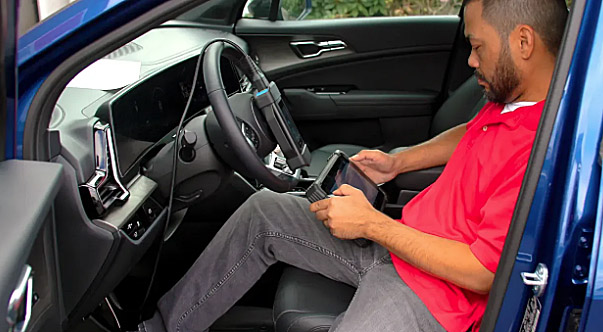
At AAPEX in November 2025, Bosch demonstrated its AI-powered diagnostic assistant called the Super Technician. It uses Bosch’s global knowledge pool of vehicle repair issues and solutions to help technicians diagnose problems.
In March, Bosch also announced plans to acquire Uptake Technologies, Inc., a Chicago-based startup specializing in AI-based predictive analytics for commercial fleets. Bosch stated that Uptake’s AI capabilities would increase its predictive maintenance offerings and vehicle health services capabilities.
Technology firms such as Uptake are leveraging AI to improve vehicle repair and maintenance in several ways. For example, when a vehicle is already in the shop for routine maintenance, AI identifies minor, non-urgent repairs that can be addressed at the same time.
This allows owners to get more out of scheduled vehicle repair services. AI is also used to enhance data quality by helping standardize fleet maintenance records, which often contain errors, missing details or inconsistent formatting. The cleaned data can be used for predictive modeling and trend analysis, states the study.
AI provides solutions move from a fault code to vehicle repair, resulting in quicker, more accurate outcomes. “One fleet I reviewed recently had nearly 8,000 faults per vehicle annually, which makes it difficult to distinguish critical issues from noise,” said Brian Silva, senior director of data science at Uptake. By applying AI, he added, the company can “reduce those 8,000 codes to just 5–10 actionable issues per vehicle each year.”
S&P Global Mobility also highlighted Swedish parts distributor Meko. In March, the company announced an AI service for faster and more accurate vehicle diagnostics that uses a database to provide technicians with the information needed to carry out vehicle repairs. The growing database includes information on the repairs handled by Meko’s repair shop chains over the past 10 years.
Bilstein is getting into AI, too, with its aftermarket brand Febi. It has launched a fluid testing device for shops that can assess fluid condition and contaminants on-site. The AI-enabled vehicle diagnostic tool analyzes samples of fluids such as engine oil or transmission fluid and generates a report detailing their condition and the likely causes of any abnormalities. The company says this process enhances transparency with the customer and opens new revenue opportunities.
Also in March, AutoTechIQ, a digital vehicle assessment service, introduced AutoQuoteIQ, a platform for repair shops to streamline estimates. S&P Global Mobility states that the platform uses AI, the shop’s historical data and millions of work orders to help generate accurate and transparent vehicle repair estimates.
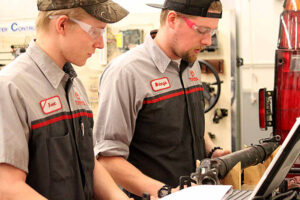
AI is likely to be a helpful tool that makes technicians’ work more efficient by reducing mistakes and speeding up repairs, rather than replacing techs, according to S&P Global Mobility. Some entry-level jobs, such as changing tires or oil, might transform as automation takes over those tasks. But as the report notes, new roles will appear, such as technicians who maintain and troubleshoot AI systems used in diagnostics and vehicle repairs.
Apart from vehicle diagnosis, the report notes that practical applications of AI tailored to the aftermarket may also include enhancing the quality of product catalogs and regulatory compliance, where AI helps streamline adherence to industry standards through automation.





Comments are closed.