Bills and regulations under consideration span from glass repair shops, lubricant waste and workplace surveillance to vehicle liens and more. Here’s where they stand.
Sacramento, Calif.—The State Legislature introduced more than 2,000 bills this year including ones that will affect automotive repair. As the session moves forward, Jack Molodanof, legislative advocate for the California Autobody Association and the Automotive Service Councils of California, is monitoring the bills. Below is his summary of key measures and where they stand today.
Legislation
Vehicle Glass Repair Shops
SB 988 – Motor Vehicle Glass Act – Concerns. This bill would, among other things, impose new disclosure and documentation requirements on glass repair shops, including advance notice about advanced driver assistance systems, calibration needs, written confirmation of calibration results, and itemized invoices and receipts. The bill would also limit when repair shops can contract for insured work, requiring a filed insurance claim, a claim or referral number, and a good-faith cost estimate before services are provided.
Status: Senate Insurance Committee.
Lubricant Waste
AB 2245 – Lubricant Waste: Packaging: Producer – Watch. This bill, known as the Lubricant Waste and Packaging Producer Responsibility Act of 2026, creates a producer responsibility program for lubricants waste and packaging associated with lubricant products. The bill requires producers to register with a producer responsibility organization to provide convenient collection and management systems for covered products at no cost to residents. The bill also exempts packaging associated with lubricant products from the Plastic Pollution Prevention and Packaging Producer Responsibility Act.
Status: Introduced.
Electric Vehicle Batteries
SB 615 –Electric Vehicle Batteries – Watch. This bill, among other things, requires that automotive repair dealers who remove electric battery from a vehicle for repair, remanufacturing, or recycling must ensure that the battery is disposed of properly, adhering to the end-of-life requirements specified in the legislation.
Status: Assembly Floor – Inactive File.
Employment
AB 1234 – Employment – Nonpayment of Wages. Concerns. This bill would impose up to a 30% administrative penalty fee on every order, decision, or award issued by the Labor Commissioner.
Status: Senate Floor – Inactive File.
AB 1331 – Workplace Surveillance – Concerns. This bill would limit the use of workplace surveillance tools, as defined, by employers, including by prohibiting an employer from monitoring or surveilling workers in employee-only, employer-designated areas, as specified. The bill would provide workers with the right to leave behind workplace surveillance tools that are on their person or in their possession when entering certain employee-only areas and public bathrooms and during off-duty hours, as specified. The bill would prohibit a worker from removing or physically tampering with any component of a workplace surveillance tool that is part of or embedded in employer equipment or vehicles.
Status: Senate Floor – Inactive File.
AB 1883 – Workplace Surveillance – Concerns. This bill would regulate the use of workplace surveillance tools and an employer’s use of worker data and prohibit an employer from using certain workplace surveillance tools, including a workplace surveillance tool that incorporates facial, gait, or emotion recognition technology.
Status: Senate Labor & Employment, Privacy & Consumer Protection and Judiciary Committees.
AB 1898 – Workplace AI Surveillance – Concerns. This bill would require an employer to provide a written notice to an employee that a workplace AI tool, was used to assist the employer in making employment-related decisions or to surveil the workplace. The bill would also require notice to be given to a worker and would require an employer to maintain an updated list of all workplace AI tools currently in use and to provide the list to workers annually.
Status: Senate Labor & Employment, Privacy & Consumer Protection and Judiciary Committees.
Vehicle Emissions
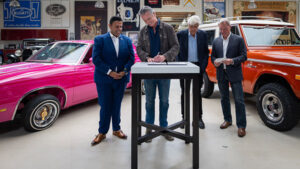
SB 1392 – Smog Check; Exemption: Collector Motor Vehicle – Watch. This bill is a reintroduction of last’s SB 712 “Jay Leno” bill. The bill would redefine collector motor vehicle to mean a vehicle that is at least 35 years old, is used primarily in shows, parades, charitable functions, and historical exhibitions and is not used as the owner’s primary mode of transportation and is insured as a collector motor vehicle. The bill would exempt a collector motor vehicle manufactured before the 1981 model year from the requirement to obtain a smog check certificate of compliance. The bill would extend the applicability of this exemption by one model year each year, beginning on and after January 1, 2028, until the final extension takes effect on and after January 1, 2032, that would exempt a collector motor vehicle manufactured before the 1986 model year from the requirement to obtain the certificate of compliance.
Status: Senate Transportation Committee.
Vehicle Liens
AB 2269 – Vehicles: Liens – Watch. This bill proposes to modify California’s vehicle lien sale procedures by changing the value threshold that determines which procedure applies. The bill would change the threshold from $4,000 to $7,000 and require automatic inflation adjustments every three years beginning in 2030.
Status: Introduced.
Career Technical Education
SB 1222 – Career Technical Education Technical Assistance – Watch. This bill would establish the Career Technical Education Technical Assistance and Equity Pilot Program, a 3-year pilot program related to technical assistance in CTE, with a focus on equity and inclusion. The bill would require the Superintendent of Public Instruction to designate, a county office of education to serve as the lead agency for administering the program. The bill would also require the Superintendent to designate 2 pilot regions to receive intensive technical assistance services, as provided. The bill would appropriate $4 million from the General Fund to the Superintendent for allocation to the lead agency for purposes of implementing the pilot program for the 2026–27 fiscal year.
Status: Senate Education Committee.
Other Bills of Interest
AB 1421 – Road Usage Charge – Watch. This bill would require the California Transportation Commission to conduct research and develop recommendations related to a road user charge or mileage-based fee system. The Commission would be required to submit a report with its findings and recommendations to the Legislature no later than January 1, 2027.
Status: Senate Transportation Committee.
AB 2564 – Surveillance Pricing – Watch. This bill would prohibit a retailer from engaging in surveillance pricing. The bill would define “surveillance pricing” to mean offering or setting a customized price for a good for a specific consumer or group of consumers, based, in whole or in part, on personally identifiable information collected through electronic surveillance technology.
Status: Introduced.
SB 354 – Insurance Consumer Privacy Protection Act of 2025 – Watch. This bill would create and update standards for the collection, processing, retaining, or sharing, collectively known as “processing,” of consumers’ personal information by licensees and their third-party service providers.
Status: Assembly Insurance Committee.
SB 1069 – Motor Vehicle Pollution Control Devices – Watch. The bill seeks to reform CARB application process to streamline approvals for aftermarket emission products seeking clearance to be sold in the state. It establishes a clear review timeline requiring the board to determine whether an aftermarket-part exemption application is complete within 30 days and to approve or deny the application within 60 days after it is deemed complete.
Status: Senate Environmental Quality Committee.
Regulations
California Energy Commission (CEC) – Replacement Tire Regulations. ASCCA and CAA have heard that the California Energy Commission (CEC) plans to move forward this year with replacement tire efficiency (low rolling resistance) regulations. These regulations would require tire retailers—including all automotive repair dealers that sell or replace tires — to display signage, provide tire efficiency disclosures to consumers, include this information in advertising, and ensure retailers receive training on the sale of these new, more efficient tires. The regulations are expected to be released in mid to late year. ASCCA and CAA will continue to monitor developments and provide updates as they become available. For more details, see the link.
BAR Airbag Safety Regulations. BAR is proposing regulations that would prohibit an automotive repair shop from installing or using any component designed to mislead a vehicle owner into believing a functional airbag has been installed. Shops would be required to restore any airbag that is part of an inflatable restraint system to its original operating condition, as designed by the original equipment manufacturer. In addition, shops would be required to purchase all airbag replacement parts or components from the manufacturer or an authorized supplier or reseller and retain receipts for all parts purchased and received. See link, pages 13-14.
BAR Vehicle Storage Fee Regulations. The BAR has released proposed regulations that would significantly impact how automotive repair dealers charge vehicle storage fees and set a troubling precedent for the future. The proposal raises several concerns, including allowing BAR to publicly survey and post vehicle storage rates, imposing an unrealistic one-day customer notification requirement, and effectively requiring repair shops to provide at least three days of free storage before fees may accrue. ASCCA and CAA have submitted written comments outlining concerns. For more details, see the link.
BAR Tear Down and Towing Regulations – Proposed Amendments. New BAR regulations impose requirements on automotive repair dealers, including, but not limited to, requiring shops that arrange towing on behalf of a customer to list towing fees on a separate document rather than including them in the repair estimate. Due to concerns raised about the towing fee documentation requirements, BAR has indicated that it plans to make changes to these provisions. ASCCA and CAA are working with BAR to address these concerns. See the link for the full regulatory text.
BAR Internet-Based Advertising Regulations- Proposed Clarification. These new regulations require all shops to clearly display in any internet-based advertising the following 1) the Business name; 2) the ARD registration number and 3) the phone number registered with BAR. Due to questions and concerns with regard to phone numbers, BAR has indicated that they were going to provide further clarification through possible revised regulations and/or FAQs with examples to the industry. ASCCA and CAA will work with BAR to make sure clarification is provided for the industry. See link for full regulatory text.




Comments are closed.