
Since replacement parts are non-discretionary, their declining sales share means that a growing portion of aftermarket sales consists of discretionary products
Fort Wayne, Ind.—Replacement Parts are essential for vehicle operation and remain the largest, by far, of the four major groups of aftermarket products. However, according to the latest Lang Aftermarket iReport, their share of the light-vehicle aftermarket has been declining for more than 10 years, as two other product groups have been growing faster each year.
“The shrinking aftermarket share of Replacement Parts, which are non-discretionary purchases, has increased the volatility of aftermarket product volume, since discretionary products are steadily expanding their aftermarket positions,” states the analysis.
The following are key takeaways from the report.
Four Major Product Groups
Light vehicle aftermarket products can be categorized into four major groups: Replacement Parts, Accessories, Chemicals, and Tools & Equipment. Over the past 10 years, each major product group has performed differently in annual sales and in its share of aftermarket growth.
Replacement Parts
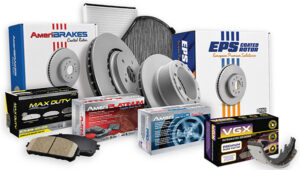
Replacement Parts are essential for vehicle operation and are subject to wear and tear. As a result, they must be replaced periodically. Peaking at over two-thirds of light-vehicle product volume in 2011, Replacement Parts fell below a 63% share in 2020 as COVID-19 affected the aftermarket, and they have continued to retreat in market share.
Replacement Parts generated about $10 billion in product gain over the past 10 years. Despite their reduced market share, they generated the greatest dollar growth of the four major product groups.
Chemicals Lose Share
Chemicals, whether necessary for vehicle operation or discretionary (waxes, polishes, cleaners, etc.), also declined almost one-fifth in light vehicle product share between 2015 and 2025.
Despite this share reduction, Chemicals recorded nearly a $1 billion sales increase, at user-price, over these 10 years.
Accessories Expand Share
Accessories modify the appearance, performance, or handling of light vehicles. They are discretionary purchases and not required for vehicle operation (compared to Replacement Parts and some Chemicals) because they modify a vehicle rather than restore it to its original performance or appearance.
They significantly expanded their light vehicle product share by more than one-third between 2015 and 2025. Accessories ranked second in aftermarket product volume during the past 10 years, and recorded the third-largest product gain, almost $9 billion at user-price.
Tools & Equipment Hit Largest Share Growth
Based on a preliminary analysis, Tools & Equipment (a mix of discretionary and non-discretionary products) added over 400 basis points to their light-vehicle product share between 2015 and 2025, the largest increase among the four major aftermarket product groups.
Tools & Equipment more than tripled the annual growth pace of the much larger product category of Replacement Parts.
Aftermarket Sales Growth by Product Group
Replacement Parts generated the largest share of light vehicle aftermarket product growth between 2015 and 2025, an estimated 35%, despite their market share decline. Tools & Equipment were responsible for over 30% of the gain in aftermarket product volume at user-price during these 10 years.
Accessories ranked third in growth share between 2015 and 2025, just slightly behind Tools & Equipment, with Chemicals responsible for less than 3% of total light vehicle product expansion.
Product Growth Rate
Tools & Equipment recorded the highest annual rate of product growth between 2015 and 2025, over 6.0%, followed by Accessories at over 5.5%.
Replacement Parts averaged an annual growth rate of approximately 1.5% between 2015 and 2025 (lower than the overall annual growth rate), while Chemicals increased at less than 1.0% annually.
Nevertheless, Replacement Parts added more total product volume over these 10 years than the combined gains of two of the other three major product groups.
More Volatile and Less Countercyclical
Since Replacement Parts are non-discretionary, their declining sales share means that a growing portion of aftermarket sales consists of discretionary products. Consequently, the aftermarket is becoming more sensitive to a wide range of economic, social, and consumer factors, which is increasing its volatility.
This is reducing the aftermarket’s traditionally countercyclical nature — its tendency to perform well when the broader economy weakens.




Comments are closed.