
Consumers are increasingly gravitating toward more affordable vehicle models, pressured by average new vehicle transaction prices holding at or near $50,000
East Lansing, Mich.—A new analysis on vehicle affordability in the United States finds that household earnings have improved relative to new vehicle prices. However, new vehicle affordability remains a concern for consumers.
Anderson Economic Group (AEG) has analyzed US Bureau of Labor Statistics data on the Consumer Price Index (CPI), a measure of how much prices change over time for everyday goods and services, to compare the cost of new vehicles with average weekly earnings for private jobs.
“Employees need to work 38 weeks to afford a typical new vehicle as of August 2026, which is slightly less than the number of weeks required a year ago,” said AEG analyst Dieter Roeser. “This shows average wage growth has kept pace with rising vehicle prices, which benefits consumers.”
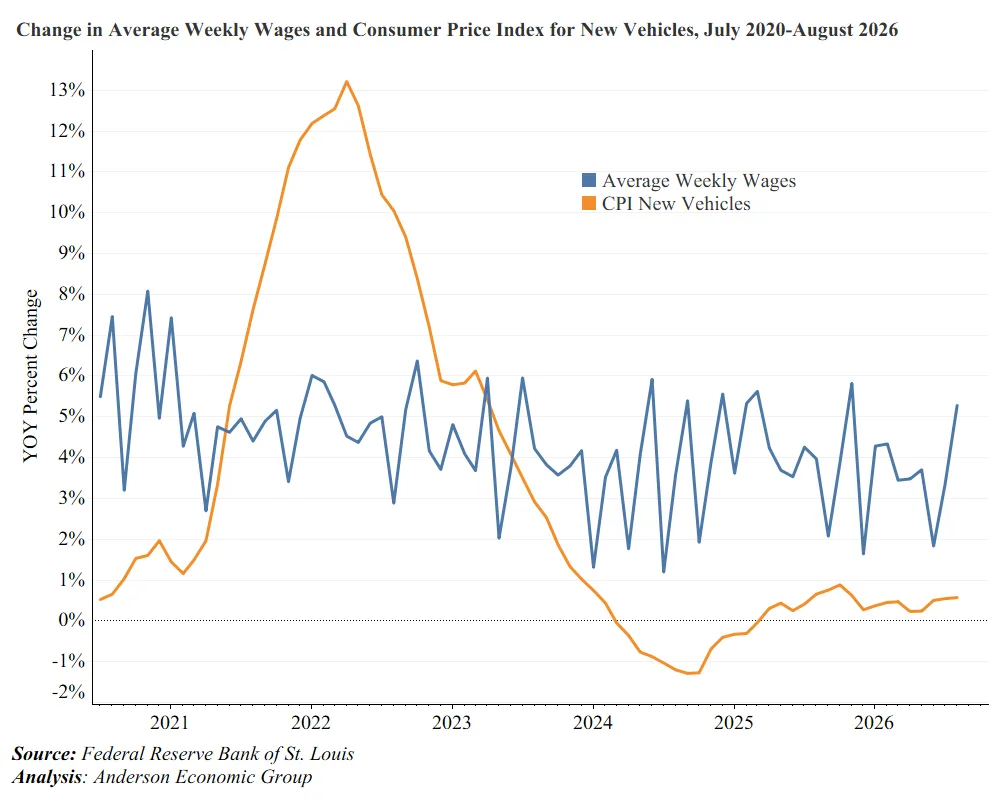
Among the findings: new car prices saw smaller increases in 2026.
- During the first eight months of 2026, the CPI growth rate for new vehicles compared to the same month in the previous year stayed at 0.6% or less each month.
- The 2026 trends represent an improvement compared to 2021 and 2022, when new-vehicle prices increased very quickly.
- The CPI for new vehicles spiked highest in April 2022, when it jumped 13.2% from April 2021.
- Year-over-year CPI growth for new vehicles has steadily declined since.
- For new vehicles, the decline in CPI over the last several years is due, in part, to resolved production issues and higher inventory levels on dealership lots.
- At the same time, average weekly earnings for all private jobs in the US increased 5.3%, from $1,248.86 in August 2025 to $1,314.74 in August 2026.
- Wage growth has outpaced growth in the price of new vehicles.
AEG’s principal and CEO Patrick Anderson observed that comparing the price of a new car to average weekly earnings has been a reliable indicator for decades. “I first learned that from Dave Littman at Manufacturer’s Bank in the 1980s, and it still works today.”
| August 2025 | August 2026 | |
| Average new vehicle price | $49,163 | $50,089 |
| Average weekly earnings | $1,248.86 | $1,314.74 |
| Weeks of average earnings to buy a typical car | ~39.4 weeks | ~38.1 weeks |
The Anderson Economic Group analyses of tariffs on the automobile industry showed that the burden dropped during the last year under the Trump administration’s policy of allowing more adjustments and credits.
This reduced the cost pressure on the price of new vehicles in late 2025 and early 2026. “Tariffs on Canada and Mexico added $12.5 billion to the costs of producing and selling vehicles in America last year,” said Anderson, “but the industry was largely able to adjust to it by 2026. If the current trade-war rhetoric turns into actual tariffs, that may not be the case next year,” he added.
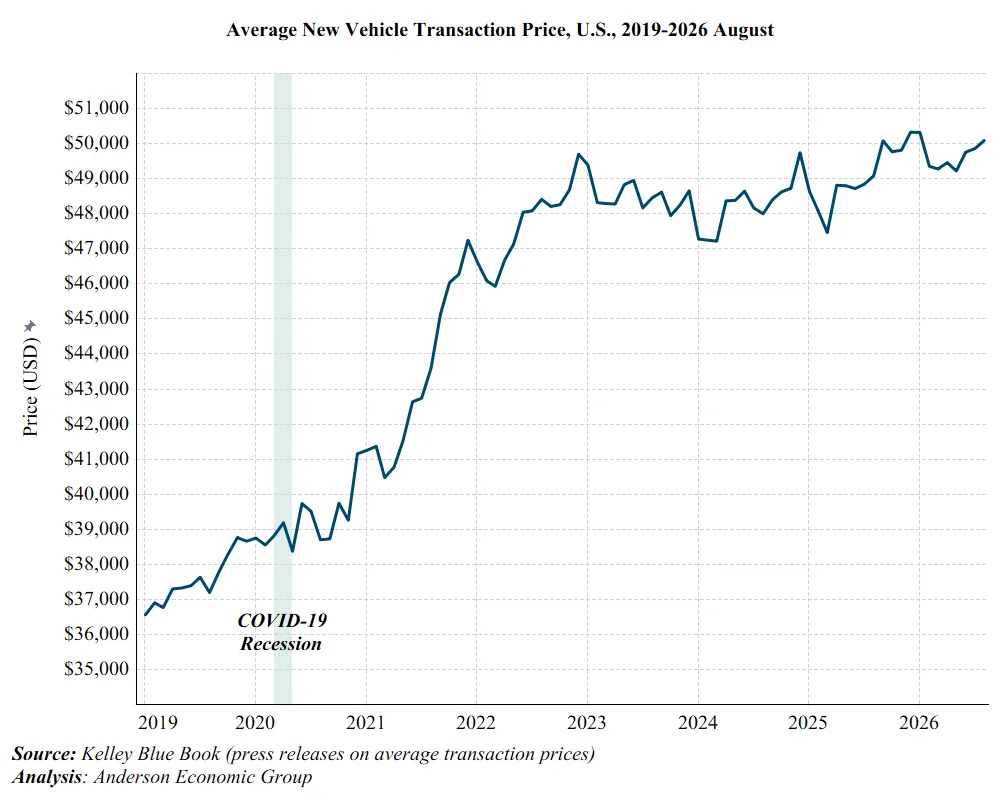
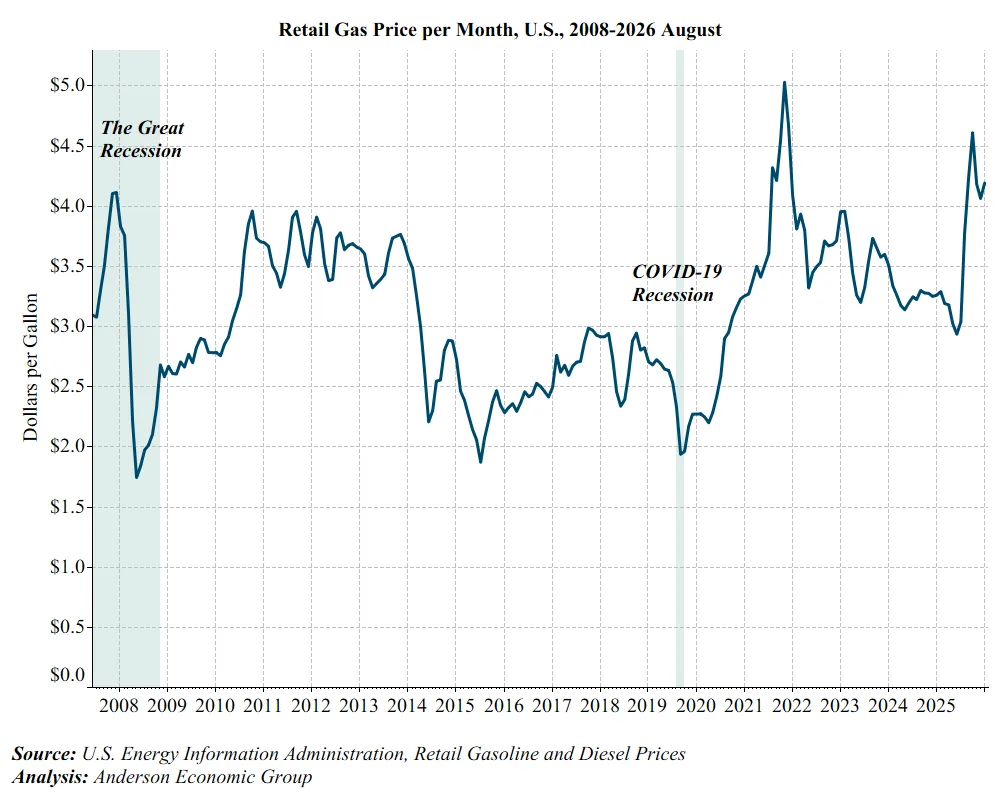
AEG senior consultant Cristina Benton, Ph.D., stated, “While wage growth is good news for consumers impacted by inflation and high gas prices, vehicle affordability continues to be a strong concern. Consumers are increasingly gravitating toward more affordable vehicle models, pressured by average new vehicle transaction prices holding at or near $50,000 since late 2022.
“This trend is exacerbated by household budgets that remain squeezed by rising costs for housing, health care, insurance, groceries, and gas.”




Comments are closed.