Forty-eight percent of Gen Z’ers say they would cancel their auto insurance altogether if it went up by 10 percent, according to survey
Austin, Texas—After home ownership, the next biggest budget item for consumers is owning a vehicle, which now represent approximately 17 percent their of annual expenses. Contributing factors are gas prices, car prices and vehicle insurance costs.
According to a new report from The Zebra, a car and home insurance comparison company, all three metrics have increased this year:
• Fuel prices hover around $4.00 a gallon nationwide.
• The cost to buy a new car is now nearly $50,000, increasing 3.5% year-over-year.
• And the median annual cost of car insurance is $2,079, with some states seeing median costs over $3,000.
The analysis notes that nearly two-thirds (63%) of consumers it surveyed are extremely or very concerned about inflation and rising prices. Additionally, nearly half (49%) are extremely or very worried about the cost of insurance.
The following are highlights from Zebra’s report.
Car Insurance Rates Are Stabilizing — But Not Everywhere
In 2026, the median cost to insure a vehicle is now $2,079 ($173 a month). That’s roughly the cost of the average two-bedroom apartment or the average cost of two months of groceries for a family of four.
While the number is high, it’s not significantly higher than the median cost the year before ($2,016).
“After years of bad loss ratios followed by premium hikes, we saw a couple years of outrageously good loss ratios,” said David Seider, CCO of The Zebra. “This has now led to a hyper-competitive environment amongst insurance companies. They are spending a ton on marketing and dropping rates to stay competitive.
“More or less: the auto industry over-shot its price correction in many geographies and rates are now stabilizing.”
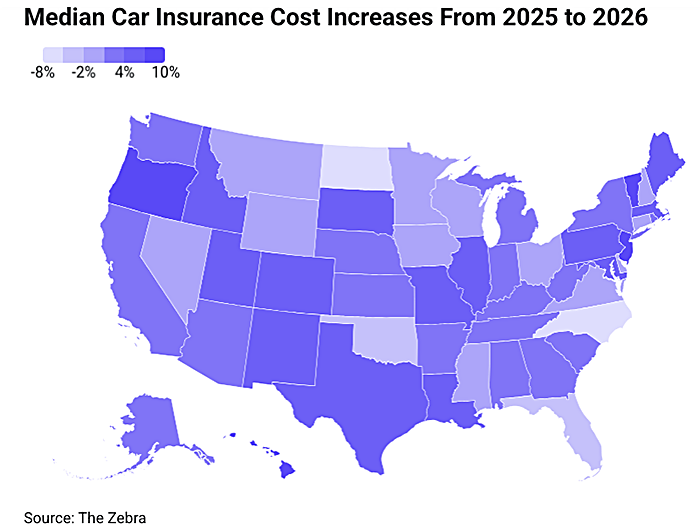
However, there are differences among individual states, which have their own insurance laws and rating factors:
• Louisiana has the highest median annual premium at $3,342, with Florida close behind at $3,334.
• Vermont, Wyoming, and North Carolina are the most affordable, all coming in under $1,400 a year.
• Just under half of states have median annual car insurance costs under $2,000.
Why Are Rates Rising in Some Places More Than Others?
Auto insurance is a state-regulated industry. Each state has their own requirements and minimums, and each state approves how much insurance companies can charge, which can lead to sudden price increases (New Jersey).
Louisiana, Zebra notes, for example, is facing bodily injury claims at three times the national rate due to high rates of litigation, which contributes to premiums staying high.
“There have been lots of state-by-state decreases for carriers this year,” Seider said. “I expect to see some states have meaningful premium drops on a per-carrier basis. Take Florida, which went from being a no-go area to being one of the highest business-development priorities for carriers. Some of that is due to Florida’s tort reform and some is because we had a quiet hurricane season last year.”
As Some Rates Jump, Consumers Are Taking Greater Risks
The report states that people across generations are changing their behavior based on their economic concerns. When asked how they would react to a 10% jump in their car insurance costs, 45% of consumers reported that they would reduce coverage or increase their deductible. More than a quarter of drivers (29%) would consider canceling or suspending their auto coverage entirely.
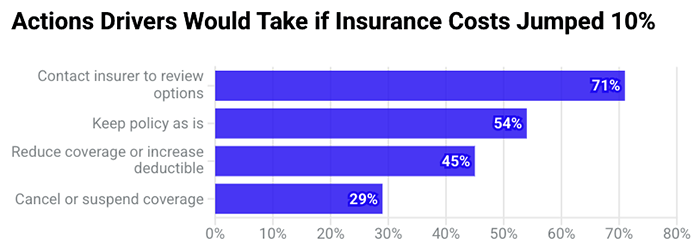
Zebra’s analysis says that Gen Z and millennial consumers are feeling particularly squeezed by insurance costs. More than half (53%) say their personal financial situation has significantly influenced their insurance spending, compared to just 38% of other consumers. And 48% of Gen Z say they would cancel their insurance altogether if it went up by 10%.



Comments are closed.