
There’s often a gap between what survey scores report and what customers say when given the chance to be specific
Louisville, Colo.—While dealerships and service centers are posting strong satisfaction scores among customers, they are also shedding light on other, seemingly contradictory, dynamics, according to a recent survey of more than 1,000 vehicle owners.
Of note, 88% of customers rate their most recent visit positively and 93% say they’re likely to come back. But when asked how much they trust the industry, only 37% say “a great deal,” states a report from research firm Alchemer, which conducted the survey.
The following are additional takeaways from the analysis.
1. What Happens After Giving Feedback
Fifty-eight percent of customers say they’ve been asked for feedback at service centers and gave it, while 24% say they’ve never been asked at all. But while 87.6% of customers who gave feedback say they were satisfied with the response they received, only 17.6% actually saw a visible improvement or change.
2. Email is automotive’s feedback workhorse, and its weakest link
Among the customers who gave feedback after their service experience, email survey is the most common channel, capturing 62% of all feedback submissions. It’s also the channel least likely to get a response to that feedback.
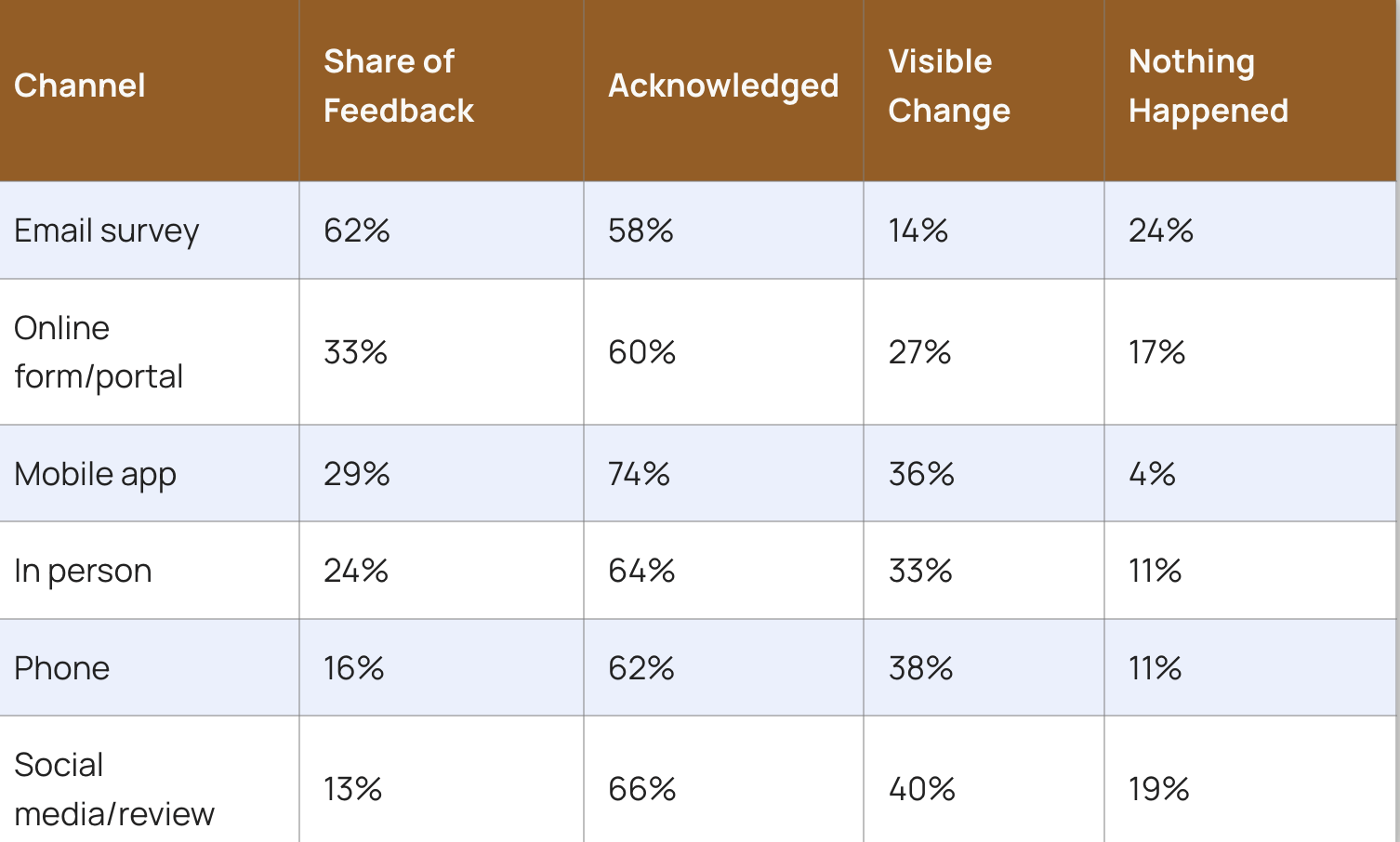
As the study finds, nearly one in four survey respondents got nothing back if the survey was sent by email. Mobile app users almost never get ignored when sharing feedback in the app. How service centers collect feedback largely determines whether anyone ever acknowledges or acts on it.
3. Service centers’ most loyal customers trust them the least
Customers 61-years-old and older are automotive’s highest-loyalty, highest-retention segment, but they’re also the age group least likely to say they trust dealerships “a great deal.”
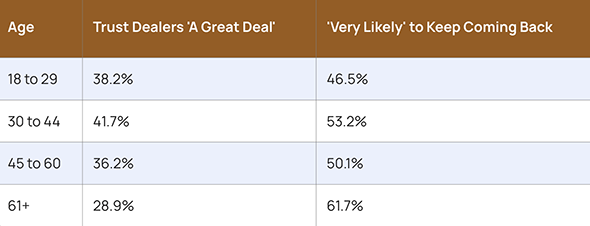
High retention and low rate of trust suggests that loyalty is more like habit and familiarity than genuine confidence and trust. That makes customers 61-years-old and older a stable segment today, and a vulnerable one when something goes wrong.
4. Most customers do their homework, but a digital presence doesn’t always pay off
The analysis reveals that automotive customers research heavily before choosing a provider: 70.8% do at least some research, including 29.9% who research extensively, and 95.7% state that the information they needed was very or somewhat easy to find online.
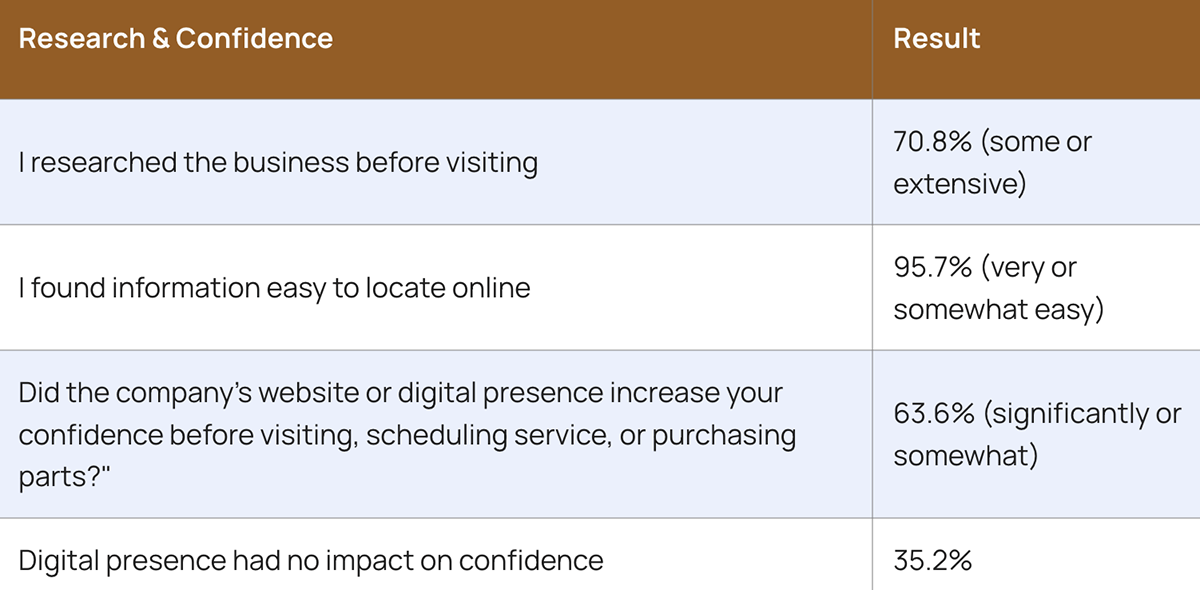
More than a third (35.2%) of customers say all that digital research did nothing for their confidence in the service center — accessible information doesn’t always translate into more confidence.
As Alchemer notes, “Something in how that information is presented, not just whether it’s findable, is leaving a meaningful share of researchers just as uncertain as when they started.”
5. Price barely ranks as a visit driver and dominates the complaint list
According to the survey, Alchemer states that when customers are asked what shaped a specific visit, cost/value ranks fourth, behind ease of getting help, speed and staff professionalism.
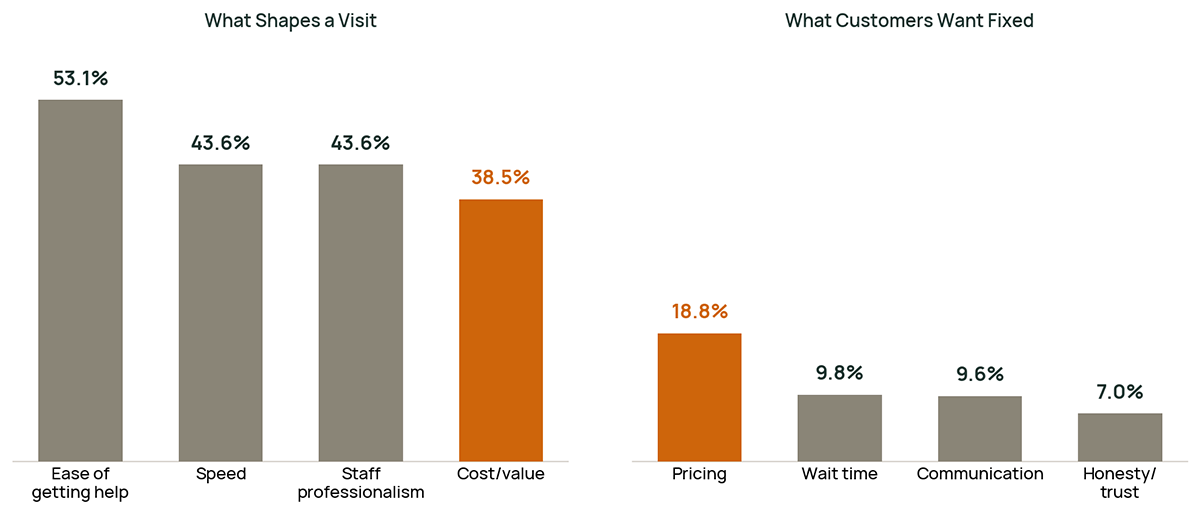
However, when the same customers were asked what they’d change about the industry, pricing jumps to first place at 18.8% of all comments, nearly double the next biggest theme (wait times, at 9.8%).
Only about one in five customers who flagged cost/value as a visit driver also complained about pricing when asked what to improve. In fact, 57.5% of customers who complained about pricing hadn’t named cost/value as a top-three factor in their visit at all.
Alchemer states that the above trends and paradoxes are reflective of a gap between what scores report and what customers say when given the chance to be specific. Service centers that close that gap, tend to treat feedback as a dialogue, not a an end-game, non-actionable conclusion.


Comments are closed.