
New automotive customer experience research reveals insights on consumer reviews, satisfaction ratings and more
Louisville, Colo.—New research reveals several findings about consumer behavior, review preferences, satisfaction ratings, emerging feedback channels and brand loyalty across the automotive customer experience.
“Where customers look for information, how they provide feedback and whether they feel heard can reveal meaningful insights beyond topline satisfaction scores,” said Brian Henley, Vice President of Research Solutions at Alchemer, which released two new automotive customer experience reports. “Businesses that understand the nuances can build better service, greater trust and lasting loyalty.”
Numbers at a glance
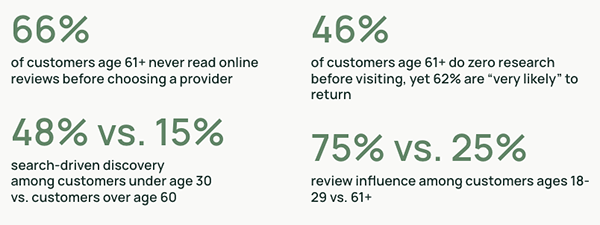
Key findings
Mobile feedback is more likely to be acknowledged and acted upon than email feedback
Email is the most widely used feedback channel among automotive customers. However, comments submitted through mobile apps are rarely ignored and significantly more likely to lead to acknowledgement and visible action.
- 62.2% of feedback submissions come through email surveys, making email the most commonly used feedback channel.
- 74.1% of customers providing feedback through a mobile app receive an acknowledgment, compared with 57.6% through email.
- 36.4% of mobile app respondents see a visible change after providing feedback, compared with just 14.2% of email respondents.
- Only 4.2% of mobile app respondents say nothing happened after providing feedback, compared with 24.1% of email respondents.
How customers find their shop
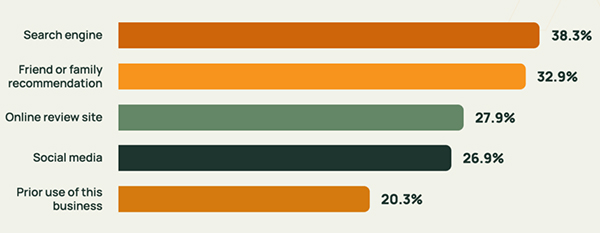
Facebook outranks Yelp for automotive service reviews across all age groups
Online reviews play an important role in how customers choose automotive providers, and the research shows notable differences in which review platforms influence their decisions.
- More than 67% of customers read online reviews before choosing a dealership or service center.
- Among those customers, 76.9% say reviews influence their decision.
- Google is the leading review source across every age group.
- Facebook is more influential than Yelp across every age group in the study, with customers under age 45 relying on it most heavily.
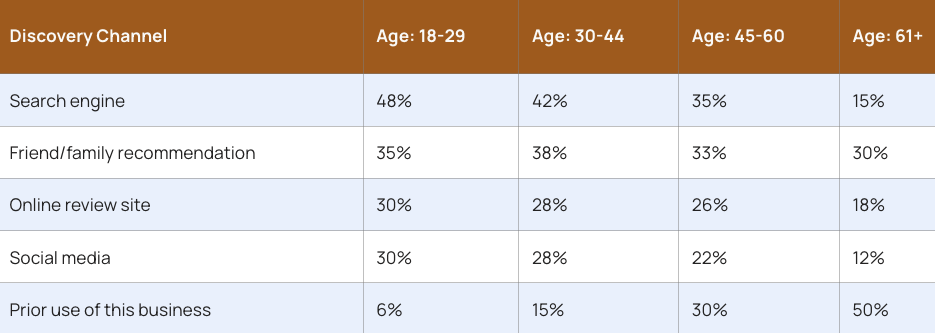
How different generations seek shops
High satisfaction ratings don’t necessarily mean high trust
Automotive customers overwhelmingly report positive experiences and strong intent to return, but that doesn’t equal trust.
- 88% rate their most recent automotive experience positively.
- 93% say they are likely to keep coming back.
- Yet only 37% say they trust dealerships “a great deal.”
- 60.6% say their expectations are higher than they were two years ago.
The feedback gap: Women get asked for feedback less often
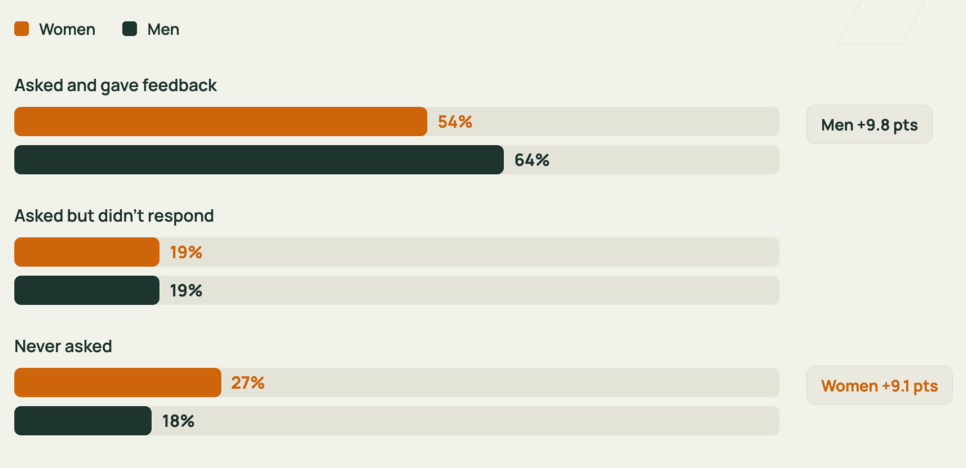
Women experience a weaker automotive feedback loop
The research also reveals differences in the automotive feedback experience between men and women, with women less likely to be asked for feedback and more likely to report receiving no follow-up after providing it.
- 27% of women say they have never been asked for feedback, compared with 18% of men.
- 54% of women say they were asked for feedback and responded, compared with nearly 64% of men.
- 22.2% of women say nothing happened after they provided feedback, compared with 16.2% of men.
- 10.1% of women report receiving no response or acknowledgment after giving feedback, compared with 6.5% of men.



Comments are closed.