
Electrification of vehicles, connected mobility ecosystems, and digitization of service delivery will fuel growth. Here are the challenges and opportunities.
Newark, Del.—The global repair and maintenance service market is likely to grow from $1,033 billion in 2025 to nearly $2,065 trillion by 2035, representing a CAGR of 7.2%. Driving the growth is the increasing vehicle parc, rising complexity of vehicles and an increasing consumer focus on vehicle longevity and safety.
According to a new analysis by Future Market Insights, Inc. (FMI), the period from 2025 to 2035 is predicted to fuel the aftermarket primarily with the electrification of vehicles, connected mobility ecosystems, and digitization of service delivery.
The following are highlights from the report.
| Market Shift | 2025 to 2035 |
|---|---|
| Regulatory Landscape | Green garage certification, EV service safety protocols, battery recycling regulations |
| Technological Advancements | Predictive AI diagnostics, OTA update management, EV battery module servicing, software recalibration |
| Industry-Specific Demand | EV thermal systems, autonomous system diagnostics, sensor calibration, regenerative brake servicing |
| Sustainability & Circularity | Eco-friendly fluids, battery recycling, green parts sourcing, carbon-neutral garage operations |
| Production & Supply Chain | Regionalized parts hubs, circular inventory systems, AI-based parts forecasting |
| Market Growth Drivers | Electrification of fleets, software-defined vehicles, predictive maintenance, sustainability policies |
EVs, hybrids, and software-defined vehicles (SDVs) are expected to demand new skills for battery management systems, power electronics, regenerative braking modules, and over-the-air (OTA) software updates. FMI states that serviceable elements may decrease in EVs, but their complexity and safety regulations will rise, requiring more valuable service operations.
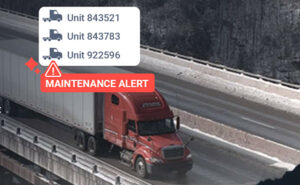
There will also be an instant shift from traditional fix-it maintenance to predictive model maintenance where telematics, AI-driven diagnostics, and real-time vehicle health monitoring are the main actors, the analysis reports, leading repair service companies to use cloud-based platforms for data analytics, parts forecasting and technician workflow automation.
Also of consequence:
• Aftermarket companies will supply technicians with training programs on digital electronics and electric vehicles.
• Repair facilities such as mobile garages, remote diagnostics, and in-app service scheduling will capitalize on metro and semi-urban areas.
• Connected vehicles allow manufacturers to receive more requests for warranty repairs that lengthen the lifespan of the fleet and use/sell parts more efficiently.
Opportunities
Rising Demand for Predictive and Connected Maintenance Solutions
Connected cars offer “substantial opportunity” in combining predictive maintenance with telematics for traditional repair services, as vehicles now send data that can inform on engine conditions, tire pressures, liquid levels, brake wear problems and more. As part of yearly contracts or subscription plans, OEMs and third-party service networks are offering predictive packages.
Expansion of Mobile and On-Demand Repair Services
Mobile and on-demand services — offering diagnostics, oil changes, tire services and minor repairs — are quickly growing. FMI states they are primarily targeting busy urban consumers and fleet operators who are looking for efficient, low-cost solutions. The mobile model enables the companies to scale quickly, as it needs little or no infrastructural investment.
OEMs are testing door-to-door routine maintenance service to grow customer loyalty through a hybrid experience of assurance and convenience. Startups and aftermarket providers are using mobile apps to schedule bookings, assign jobs and process payments digitally.
Shift Toward Electrification and High-Tech Component Maintenance
EVs offer opportunity in the service and repair of high-tech automotive parts and components, such as battery management systems, regenerative braking, inverter modules, and power electronics that require specialized tools, software programs and targeted technician training.
“The visionary service providers are the ones that will invest in both EV diagnostic tools and the upskilling of technicians, standing to gain a first-mover status,” states the analysis.
Challenges
Shortage of Skilled Technicians and Technological Training Gaps
As vehicle technology increases, it presents service-readiness challenges as technicians will need to acquire new skills in software diagnostics, sensor calibration, cybersecurity protocols and electronic system maintenance that are no longer just the traditional mechanic training courses. FMI warns that skill gap issues can lead to negative customer feedback, extended repair periods and potential safety risks.
Rising Cost of Parts and Supply Chain Disruptions
From semiconductor shortages to delays in shipping and customs clearance, parts availability has become erratic and unpredictable. Inflation and tariff-related uncertainties are increasing parts pricing, lowering margins for repair operators and increasing costs for consumers.
As a result, service providers must be proactive and employ advanced inventory management, diversify suppliers and collaborate with local manufacturers to ensure smooth running of operations. FMI also notes that complex components have led to the reduction of opportunities through generic or aftermarket parts, requiring repairers to depend on OEM-certified components.









Comments are closed.