
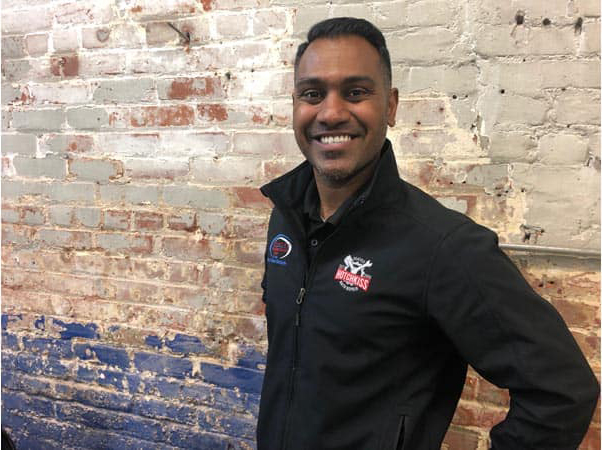
In a day and age when mergers and acquisitions, investors and private equity are making industry news and headlines, Shiju Thomas is a little different
Denver—Relay Hill Auto CEO Shiju Thomas shed his suit as an investment banker and a career in private equity in 2017 looking for a fresh start.
As he told Aftermarket Matters Weekly in 2022, “I wanted to do something greater with my time and energy. And I determined that making money for other people wasn’t the best purpose for my life, so I looked into buying a small business,” adding that he had grown up “blue collar” and had always admired the trades world.
Fast forward to today, and Thomas is now a multi-shop owner in the Denver-metro region that includes Hotchkiss Auto Repair, Arvada Square Auto, Applewood Auto Care, Applewood Auto Service, Advanced Transmission Center and, now, also Motor Tech Auto Repair, acquired this past summer.
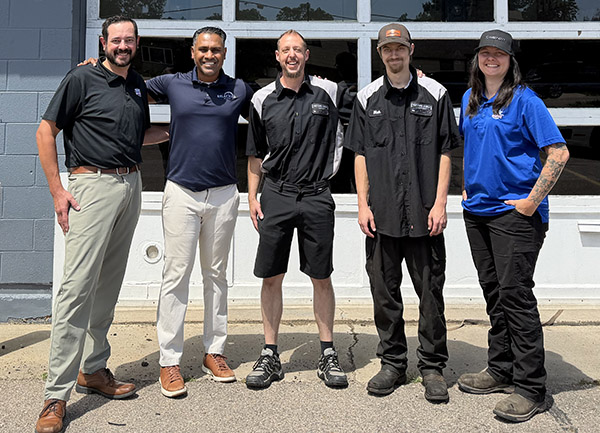
And there are plans for more. But in a day and age when mergers and acquisitions, investors and private equity are making industry news and headlines, Thomas says his philosophy on growth and what it means to be a successful shop owner is a little different.
We recently spoke with Thomas about what drives him and his business. And what doesn’t.
Note: The conversation has been edited for length and clarity.
Your mission is “Building community in the neighborhoods we serve and within our shops.” Can you expand on that?
Our latest acquisition was just the latest iteration being a local neighborhood shop. Motor Tech Auto Repair is really just a continuation of that mission over the last few years. We’re not trying to be a regional brand or trying to be private-equity backed. We’re not trying to do the very corporate thing, which is kind of counter to my background.
The market is changing so quickly. It gives me some pause just thinking about how we fit in the automotive industry today. The sexy thing to do is to find some sponsor and take some private capital and grow as fast as you can.
These days, a lot of operators and investor-backed groups just focus on more money and cash flow to get more value. And I think that it’s important and great to have that sort of orientation as a capitalist, but this is where the “Why” in the business really matters.
If you’re really people-centric, then the employees matter, the community matters, your stakeholders matter. It doesn’t always have to be all about more dollars and more cash flow. The idea of the neighborhood repair shop is really valuable to me.
How do you accomplish that?
Focus on the process and do the right thing. Outcomes and benefits on the backend will come. But really, it’s about process and, again, what’s your “Why?” We just want to stay independent and be able to make decisions that are not always driven by dollars and cents every day.
Are we capitalist? Absolutely. Do we care about our bottom line? Absolutely. Do we want to drive growth? Absolutely. Do we think that benefits not just ownership, but everyone, including our customers, when we’re able to do that? Absolutely.
But do I have a specific endgame of owning a certain amount of shops and selling? I honestly don’t. This is something I’m doing with passion and the growth is going to be one in which it makes sense for the organization and everyone involved.
I’ve told my senior leadership team that it’s like growing a family and I want to empower them. I don’t want to be front and center. I don’t want to be the face of the organization, but I also understand that sometimes I’m the “gas” of the business. When you bring investors in, that pressure can be the new gas.
But I don’t want to create artificial pressure. I don’t want to drag the organization forward into growth, I want to encourage it and have a leadership team that also wants to grow with me.
And frankly, I think I have one of the best leadership teams in the country for an independent of our size. These guys are ambitious and they’ve bought into the vision.
So what defines your strategy?
In isolation or in a vacuum, what I think about in terms of strategy is a win-win-win for all stakeholders, including our vendors who we want to grow with us. I think we can do that — and we have done it — by the idea of the neighborhood repair shop.
It’s something that’s easy to say and put on a banner, but it’s a lot harder to execute. Are you really the neighborhood repair shop when you have your owner, management or investors saying 15 percent of the cars that come into the shop should be recommended struts when they don’t really need them? Is that truly what the neighborhood repair shop is?
There is something about local brands with a long history that are part of the community and serving it — it’s different and unique. Keep it local.
If you’re really hyper-focused on the change, if you’re hyper-focused on community, if you’re hyper-focused on people, if you operate with core values, if you do things the right way, you’re going to be profitable.
At the end of the day, if management, ownership and teams can do well with those areas then the customer wins.
Do you have plans for additional acquisitions?
We want to expand the customers that we can touch, and so you need more rooftops because in automotive repair people aren’t traveling 15 miles to get service.
The more shops you have, the more people you have within a two-or three-mile radius. We want to expand our customer base and increase the opportunities for them. And we want to grow our employees and the size of the organization so there’s continued opportunity for career growth.
In the last couple years, I think we’ve done four acquisitions and it’s been fantastic. I would imagine over the next year or year and a half, we’ll do another four or five acquisitions in a shorter period of time. So, we’re going to continue to grow, including our employees.
The challenge in the automotive industry is that a lot of jobs are trading time for dollars, and there’s not really a career. It’s just a job. But we want to offer careers, so we have to keep growing so they can grow with Relay Hill Auto.
We’re figuring out our way. Our employees and customers are happy, which is really important to me.
What’s your end goal, where do you see yourself and Relay Hill Auto down the road?
When I leave the automotive industry at some point, I want to make sure that whoever’s in charge of the organization is a good steward of what we’ve already built.
I want it to continue the momentum, and that’s the entire concept of Relay Hill: the idea that Relay Hill is running a relay race and that the business transcends any one person in the race — you’re passing the baton from one person to the next.
The reality in the business cycle is you’re not always running downhill, sometimes you’re running uphill. It’s always a challenge. So, pass the baton to the next person that’s going to continue running the same race with the same ethos and culture but with their own flair and identity as you have.


Comments are closed.