
The current automotive economy is a challenging one for the U.S. consumer and it’s rippling through the latest auto repair shop trends according to new industry survey
Bethesda, Md.—The Auto Care Association recently engaged Hanover Research for the second iteration of its Repair Shop Study — an online survey of than 500 aftermarket professionals nationwide — to provide visibility into how consumer realities are playing out on the shop floor, and what they signal for the broader automotive market.
The association’s director of Market Intelligence, Michael Chung, noted that the current automotive economy is a challenging one for the U.S. consumer:
- New vehicle prices reached $50,000 in 2025 and remain elevated — average price in January 2026 was $49,191.
- On average, consumers are financing $43,759 for a new vehicle — this translates to a monthly payment of $800, and one-in-five pays $1,000/month. In fact, 21% of loans are 84 months or longer. This means a lot of new car owners will be making monthly payments for several years outside the warranty period.
- Average vehicle age has ticked up incrementally over the years — from 9.6 years in January 2002 to 12.8 years in 2025.
Chung breaks down the survey findings from the study below for a number of key takeaways.
Rising Costs Meet Cautious Optimism
The high cost of parts, equipment, and technology is the single greatest challenge facing repair shops.
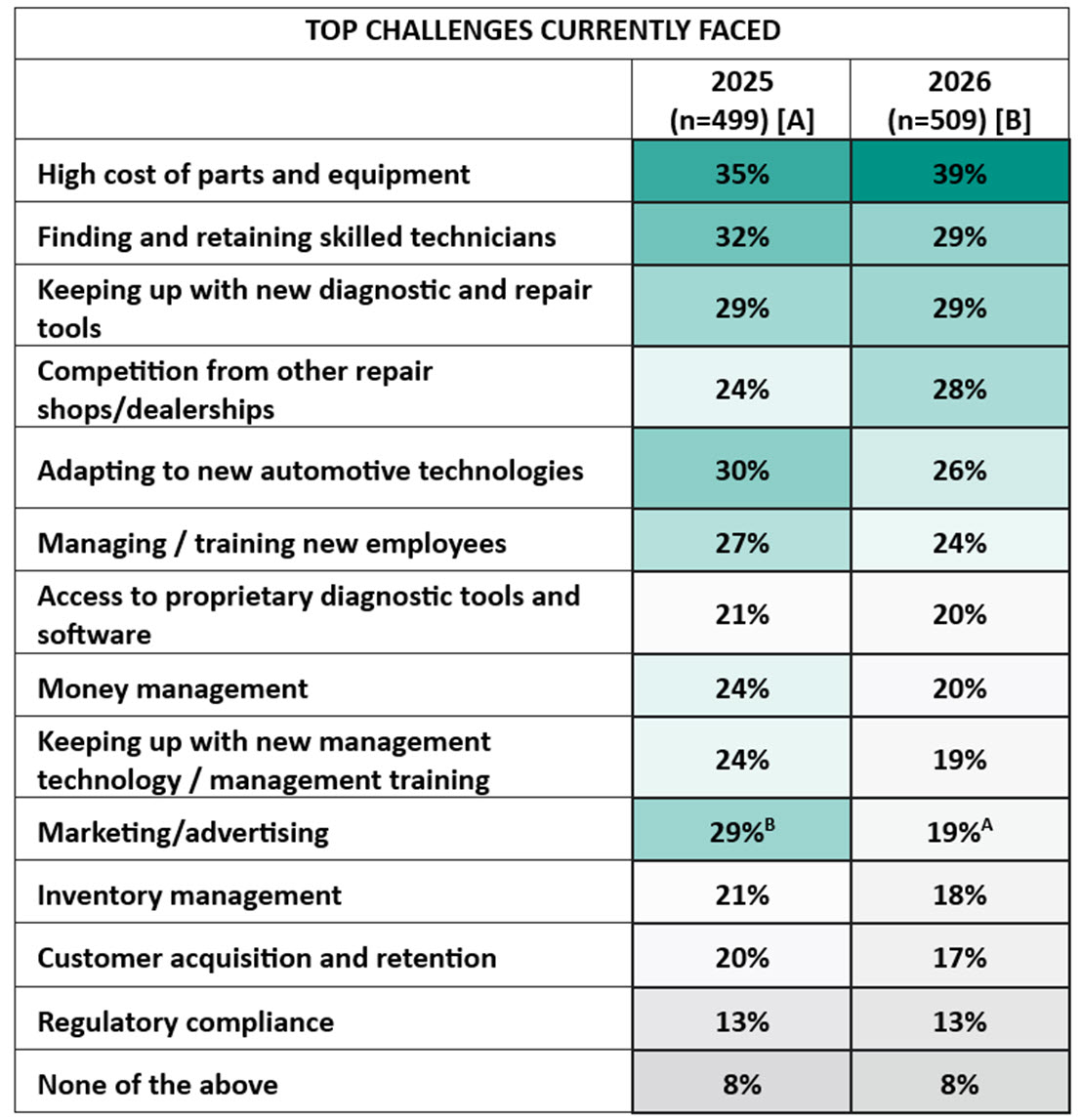
Hanover Research: Repair shop study – Wave 2, March 2026
CLICK TO ENLARGE
The industry remains cautiously optimistic, though — more than half of shops expect positive performance over the next three years and believe the overall repair market will remain strong. This optimism reflects enduring consumer demand. Americans still depend on personal vehicles, and as long as they keep them longer, the need for quality, accessible repair will only grow.
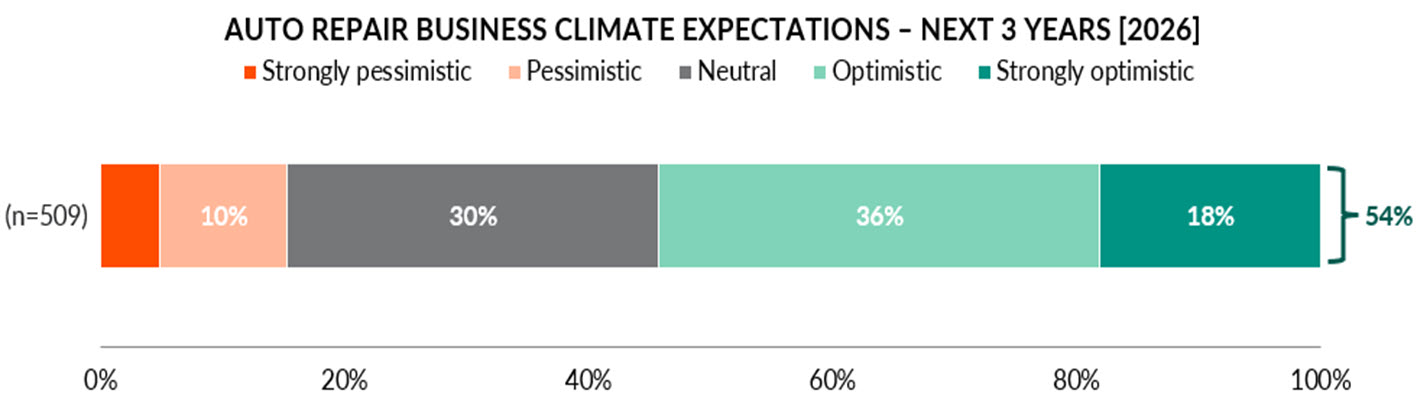
Hanover Research: Repair shop study – Wave 2, March 2026
CLICK TO ENLARGE
Parts Decisions Reflect Consumer Cost Pressures
New OEM parts remain widely used, but aftermarket and remanufactured parts play a critical role in keeping repairs affordable — this is important as shops remain responsive to consumer sensitivity around repair costs.
Lower cost, better availability, and customer preference are the leading reasons shops choose non-OEM options. Importantly, these decisions are often driven by consumer demand for choice — not by quality concerns. Many consumers want options that balance price, warranty, and performance, especially as vehicles age.

Hanover Research: Repair shop study – Wave 2, March 2026
CLICK HERE TO ENLARGE
Programming, Calibration, and the Software-Defined Vehicle
Independent shops report that while roughly half of incoming vehicles require programming, the complexity of those services is increasing. Compatibility issues, software bugs, time-intensive procedures, and the high cost of keeping tools up to date are common challenges.
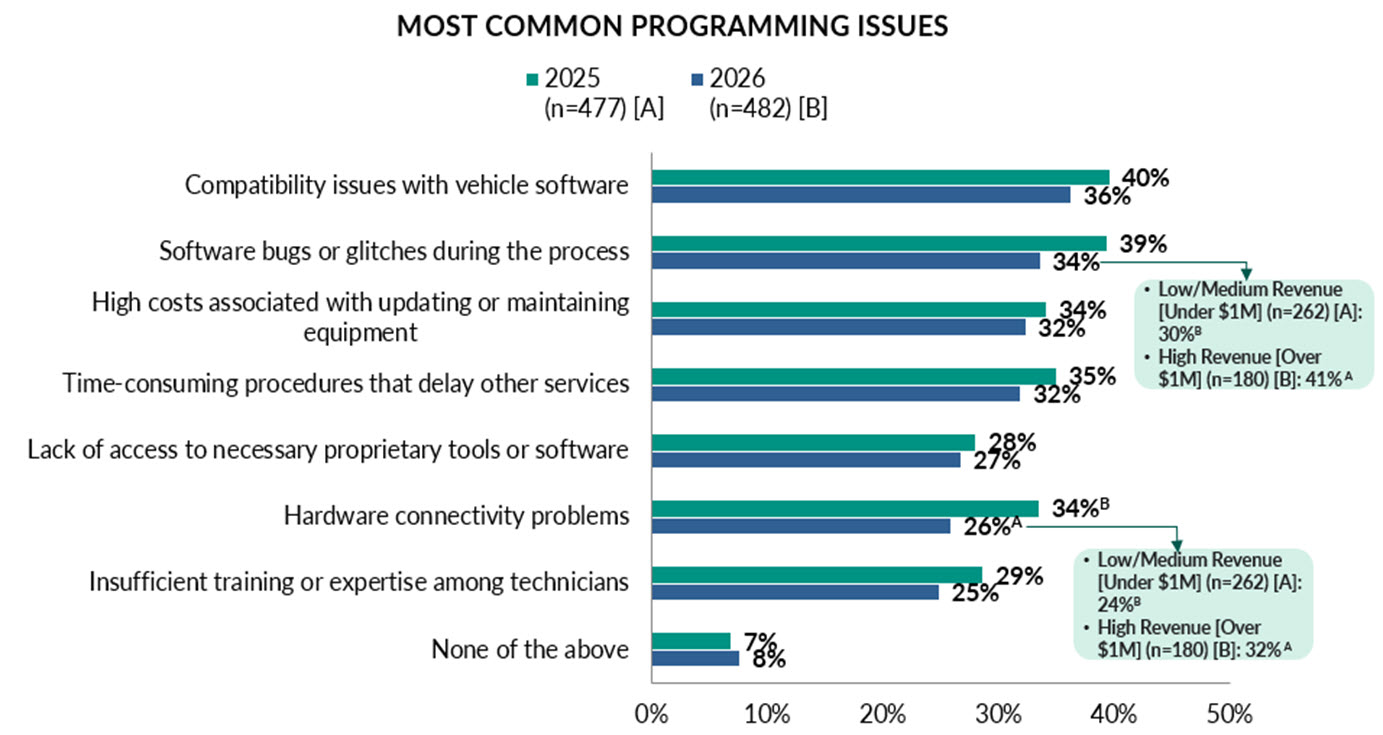
Hanover Research: Repair shop study – Wave 2, March 2026
CLICK TO ENLARGE
For consumers, this often translates into longer repair times and higher bills. It can also mean fewer repair options when certain services require proprietary tools or restricted data access. Vehicles may be sent to dealerships not because independents lack expertise, but because they lack the required digital access to complete the job.
Data Access Remains a Consumer Issue — Not Just an Industry One
Vehicle data access continues to be a defining issue in the modern repair environment. Even among vehicles no longer covered by manufacturer warranties, roughly one-third present challenges related to accessing diagnostic or repair data.
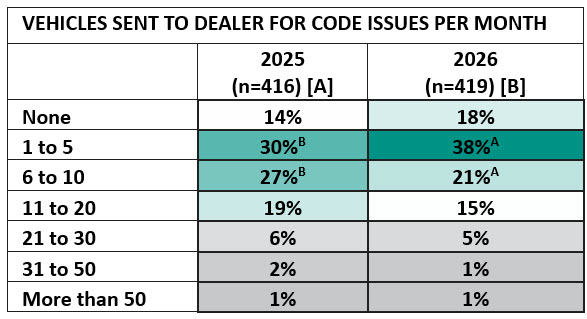
Hanover Research: Repair shop study – Wave 2, March 2026
As a result, many independent shops still send vehicles to dealerships each month due to data or scan tool limitations. Certain brands, particularly luxury and electric vehicles, are more likely to require dealer-only tools.
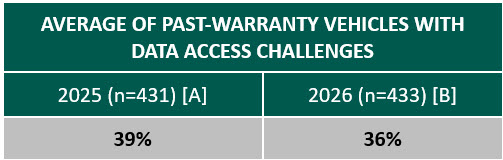
Hanover Research: Repair shop study – Wave 2, March 2026
Auto Care Association’s quarterly Key Issues and Impacts Survey identified “Increasing vehicle complexity” and “Telematics that could exclude small repair shops” as the most important issues based on member feedback (December 2025 iteration).
For consumers, this can mean fewer choices, longer downtimes, and higher costs. It also explains why “Right to Repair” has become a topic of conversation at the service counter. A majority of shops now actively educate customers about their repair rights, signaling growing consumer awareness that access and competition matter.
Labor Constraints Shape the Customer Experience
While technology dominates much of the conversation, the human side of repair remains just as important. Finding and retaining skilled technicians continues to be one of the industry’s biggest challenges and one that consumers experience through longer wait times, limited appointment availability, and reduced service capacity.
Shops report longer training requirements, increased specialization, and difficulty hiring qualified technicians. In response, many recruit only when a vacancy arises rather than proactively building talent pipelines.
What This Means for the Automotive Consumer
Taken together, the findings paint a picture of today’s U.S. automotive consumer environment:
- Consumers are keeping vehicles longer and relying more heavily on the aftermarket.
- Out-of-pocket repair costs are rising as warranty coverage declines.
- Technology and data access increasingly shape where and how vehicles can be repaired.
- Workforce and technology investments directly affect service speed and quality.
Chung states that the ability of independent repair shops to access data, invest in tools, train technicians, and offer competitive repair options is as important as ever, particularly in the current economic environment. Consumers are increasingly forced to balance safety, reliability, and affordability, sometimes choosing to delay or decline repairs altogether. This reality underscores the importance of competitive pricing, parts availability, and repair choice in today’s market.
Contact Michael Chung by clicking here to receive a copy of the survey results.






Comments are closed.