
High new car prices pressure drivers to keep vehicles longer as they strive to find more value at lower costs for parts and service
Las Vegas—Six in 10 automotive businesses expect demand for aftermarket parts and services to grow this year. That’s according to findings from a new survey by the Automotive Aftermarket Products Expo (AAPEX).
Open-ended commentary points to higher new vehicle prices, which are causing consumers to hang onto their existing vehicles longer, as the driving force for rising demand in the aftermarket.
“The price of new cars is high, so people are purchasing, repairing and maintaining older vehicles,” wrote one respondent. “People are keeping their cars for longer periods of time,” noted another. “Price of new cars justifies repairs on older vehicles,” noted a third.
One caveat to that finding is that price sensitivity shows up in the aftermarket, too. The majority (53%) have observed more interest in lower-cost parts and services. However, customer motivation appears to be focused on value, rather than pure cost savings. Respondents said quality (34%) was the top influence of buying preference, followed by price (25%) and availability (20%).
Perhaps as a consequence, respondents said their business’s sales expectations for this year are flat, compared to sales performance the year prior.
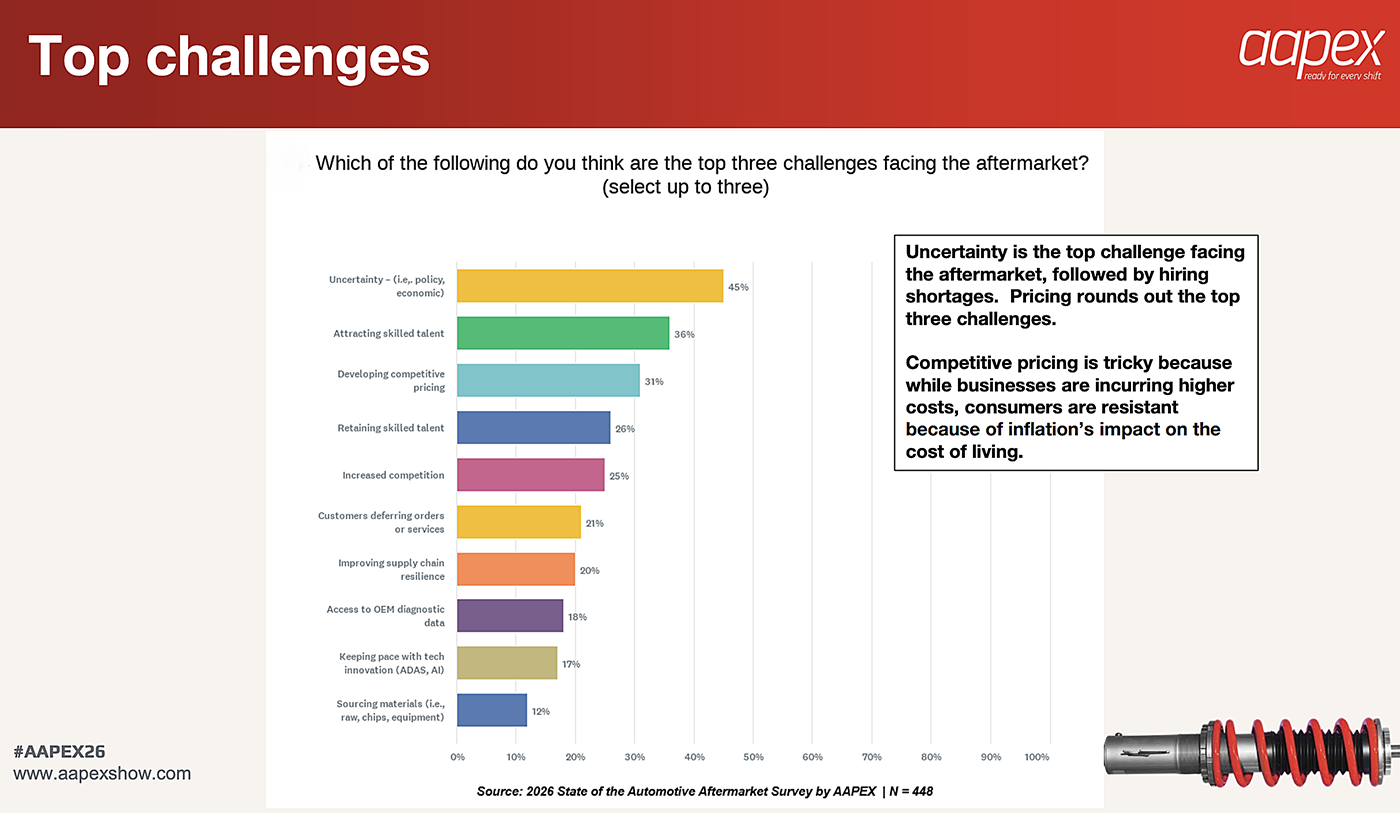
Respondents identified the top challenge as “uncertainty” (45%), which was a recurring theme throughout the findings. Many aftermarket businesses are involved in supply chain diversification initiatives, carrying higher inventory levels, and struggling to find skilled labor.
Key report findings
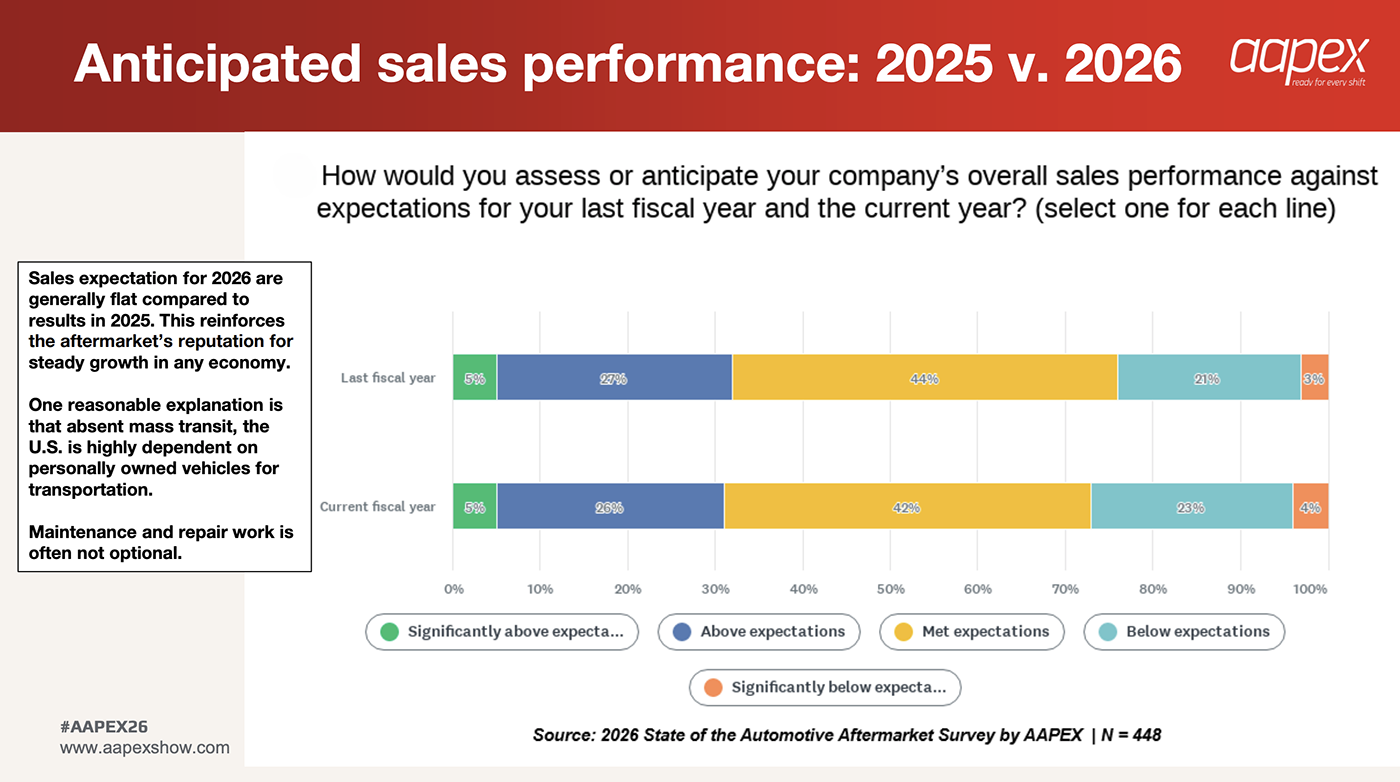
- Sales expectations. Respondents expect organizational sales to be flat compared to 2025. 31% expect to beat sales goals in 2026, while 42% said they would meet those goals. Conversely, 27% think sales will come in below expectations.
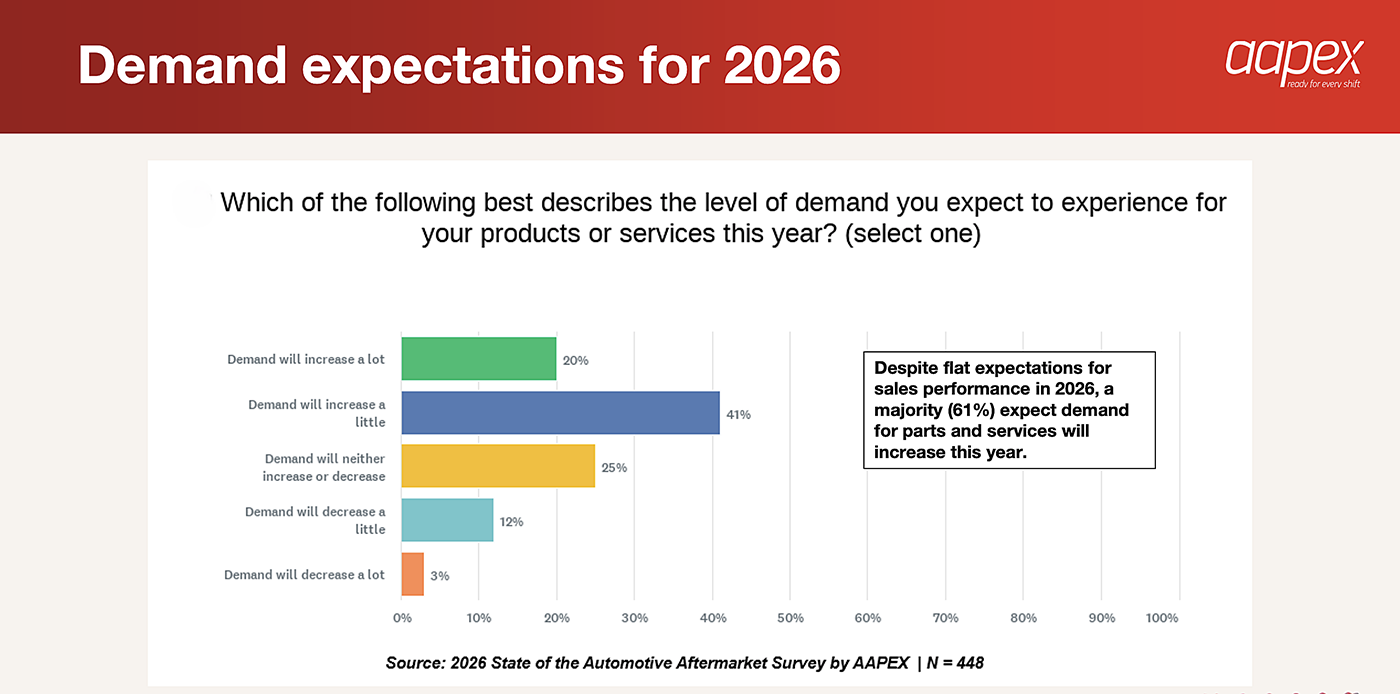
- Demand will grow. Six in 10 respondents (61%) say demand for aftermarket parts and services will grow in 2026. Open-ended comments point to high car prices and the fact that people are hanging onto their existing cars longer.
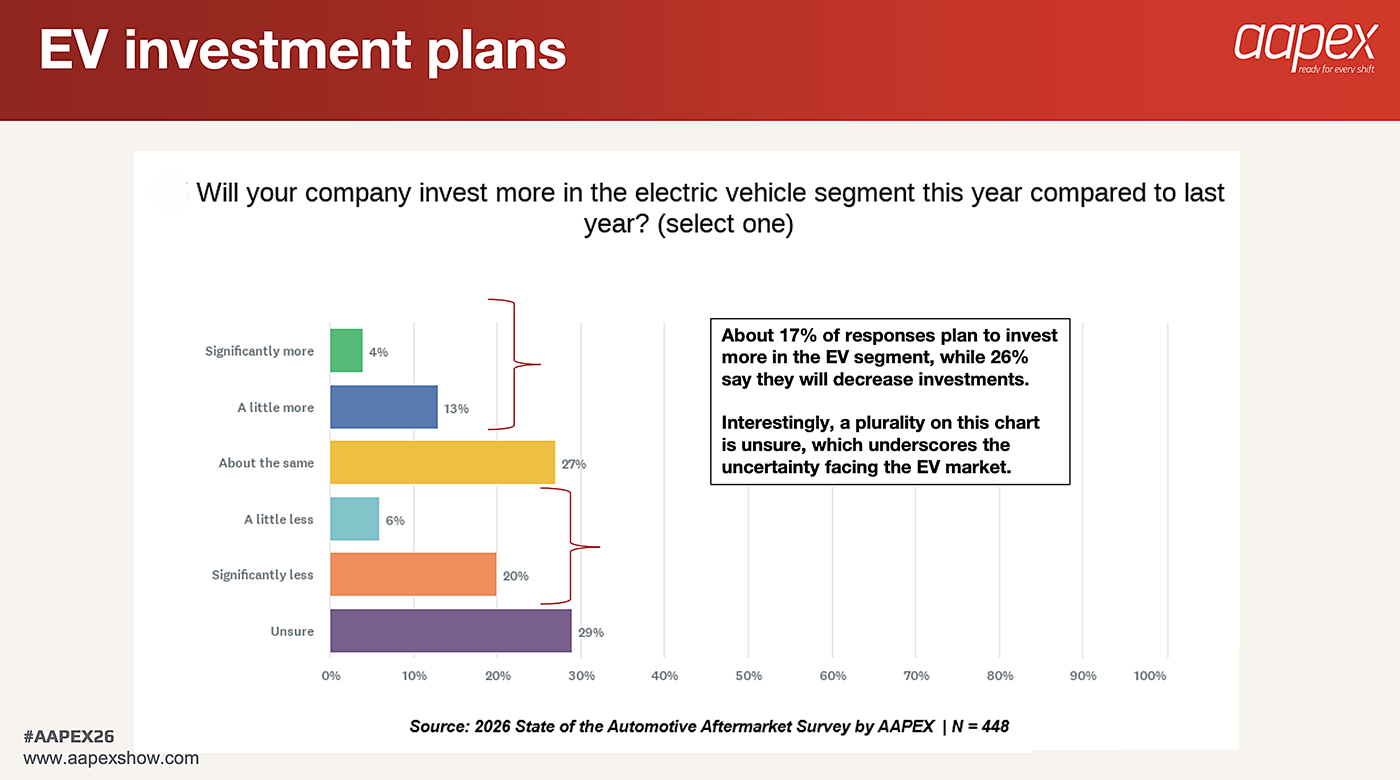
- EV investments. More respondents (26%) said they will invest less in the EV segment, compared to 17% who will invest more. Another 27% said they will invest about the same as last year. The kicker is that a plurality (29%) was unsure about EV investments.
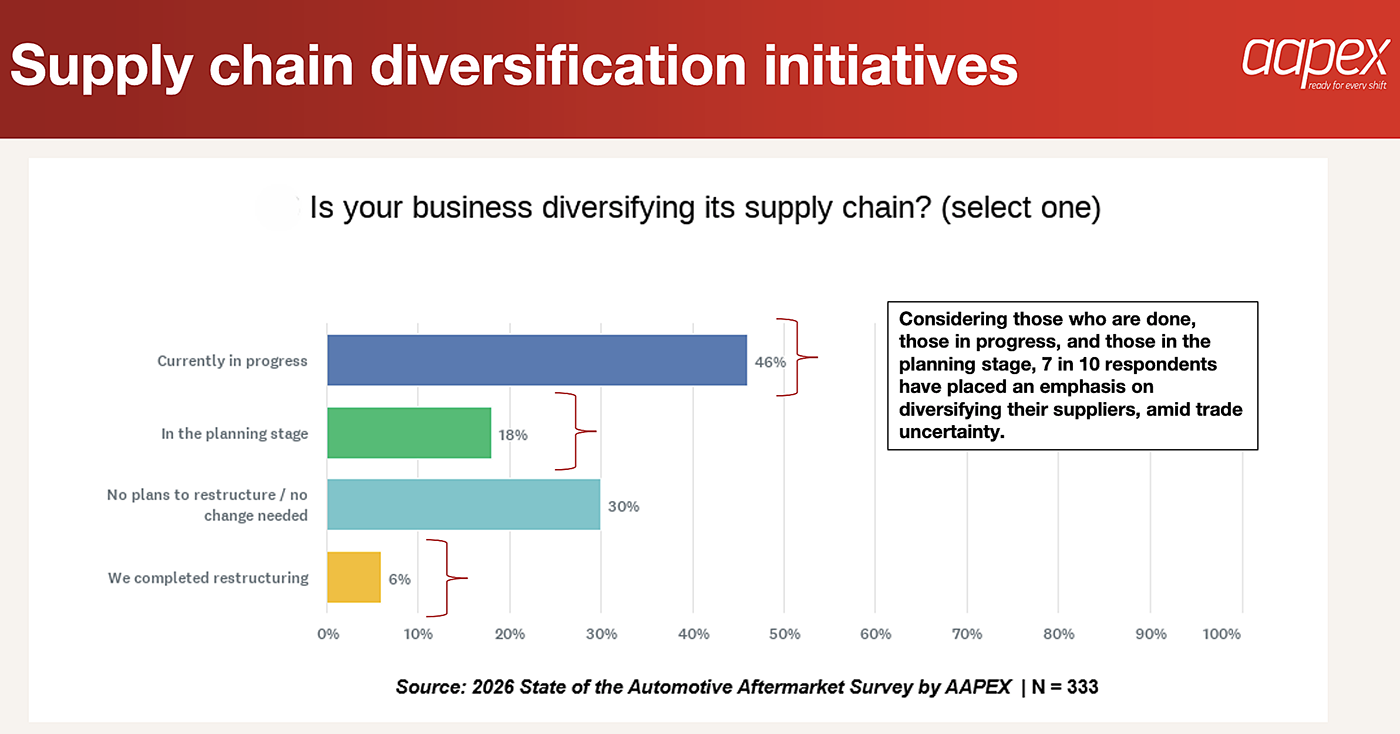
- Supply chain diversification. 70% of respondents have completed diversifying their suppliers (6%), are in the planning stages (18%), or have plans in progress (46%).
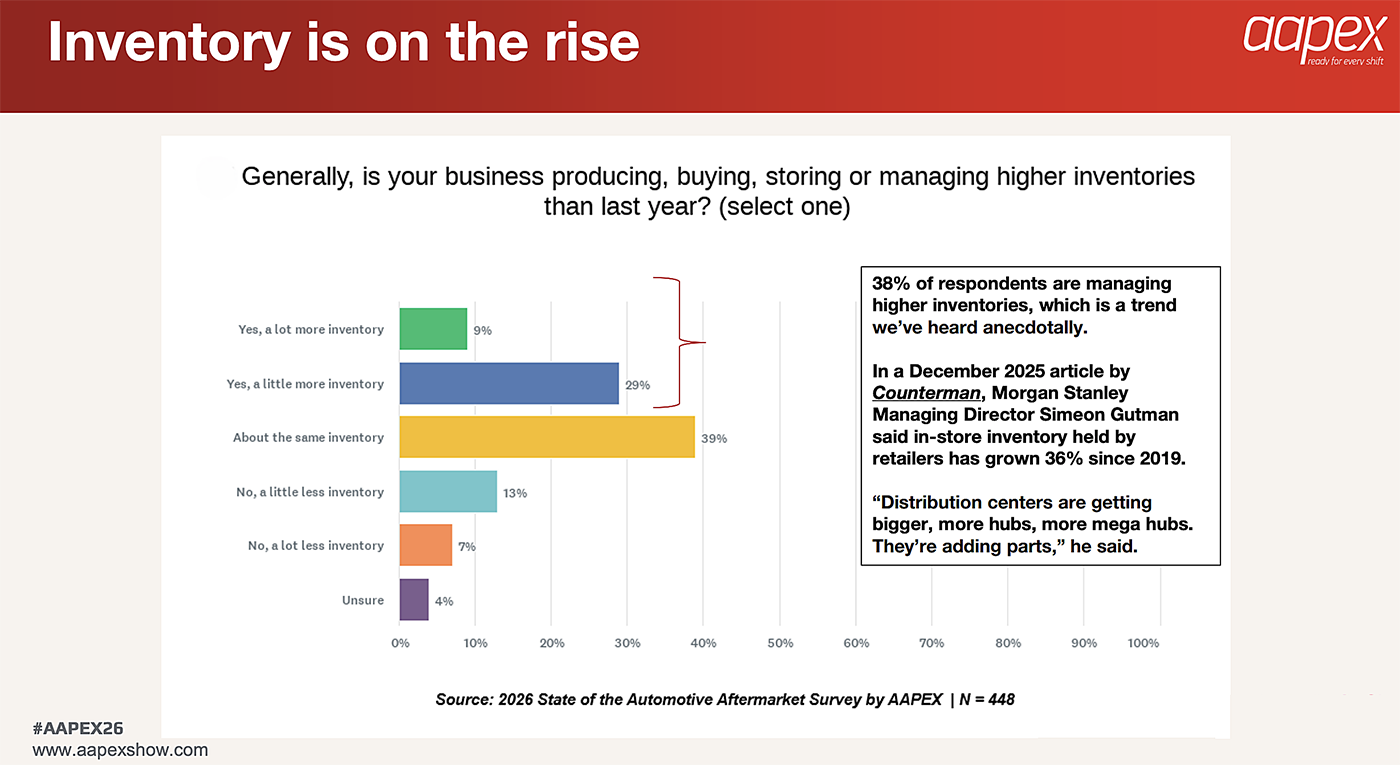
- Inventories are on the rise. 38% of respondents are managing higher inventories of parts, compared to 20% who say they are managing fewer parts.
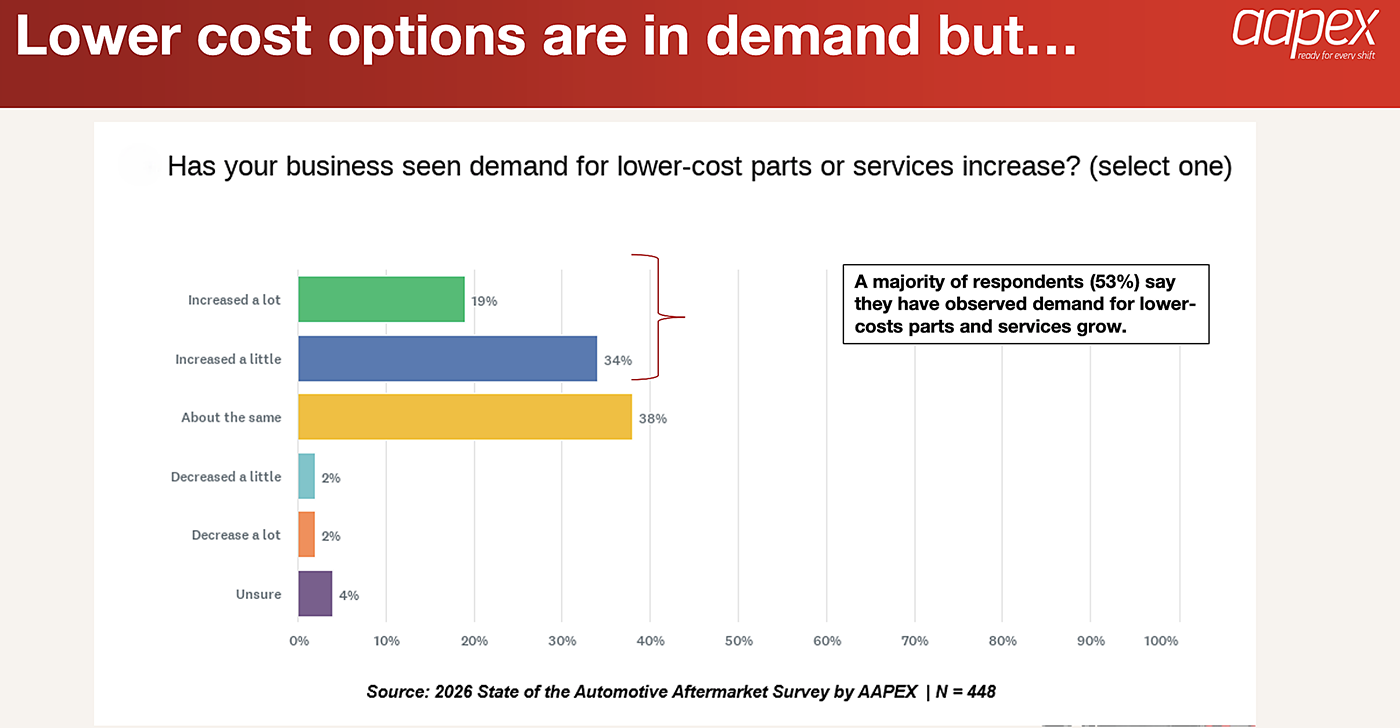
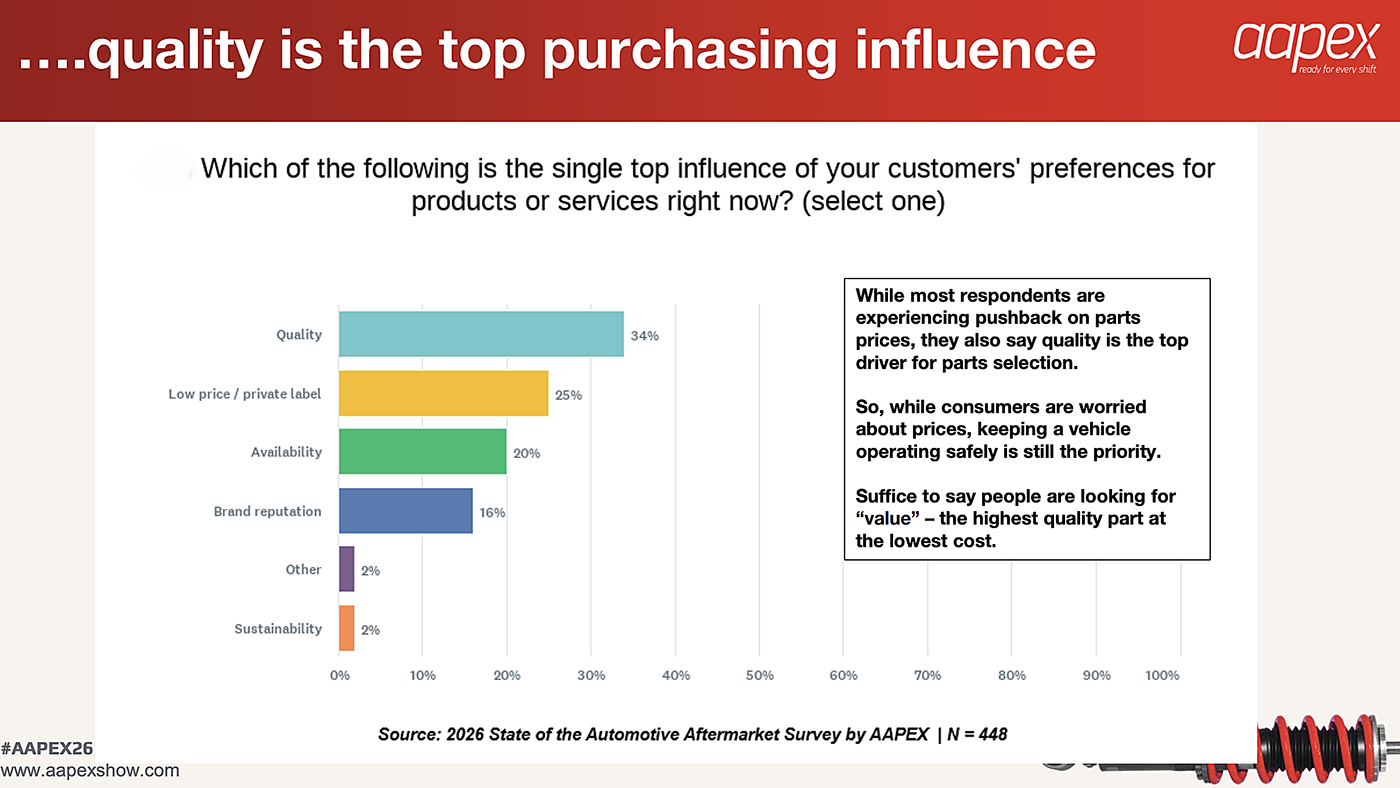
- Demand for lower-cost parts grows. A majority (53%) say they have observed demand for lower-costs parts and services grow. However, quality is still the “top influence” for customer preference, suggesting many buyers are shopping for value.
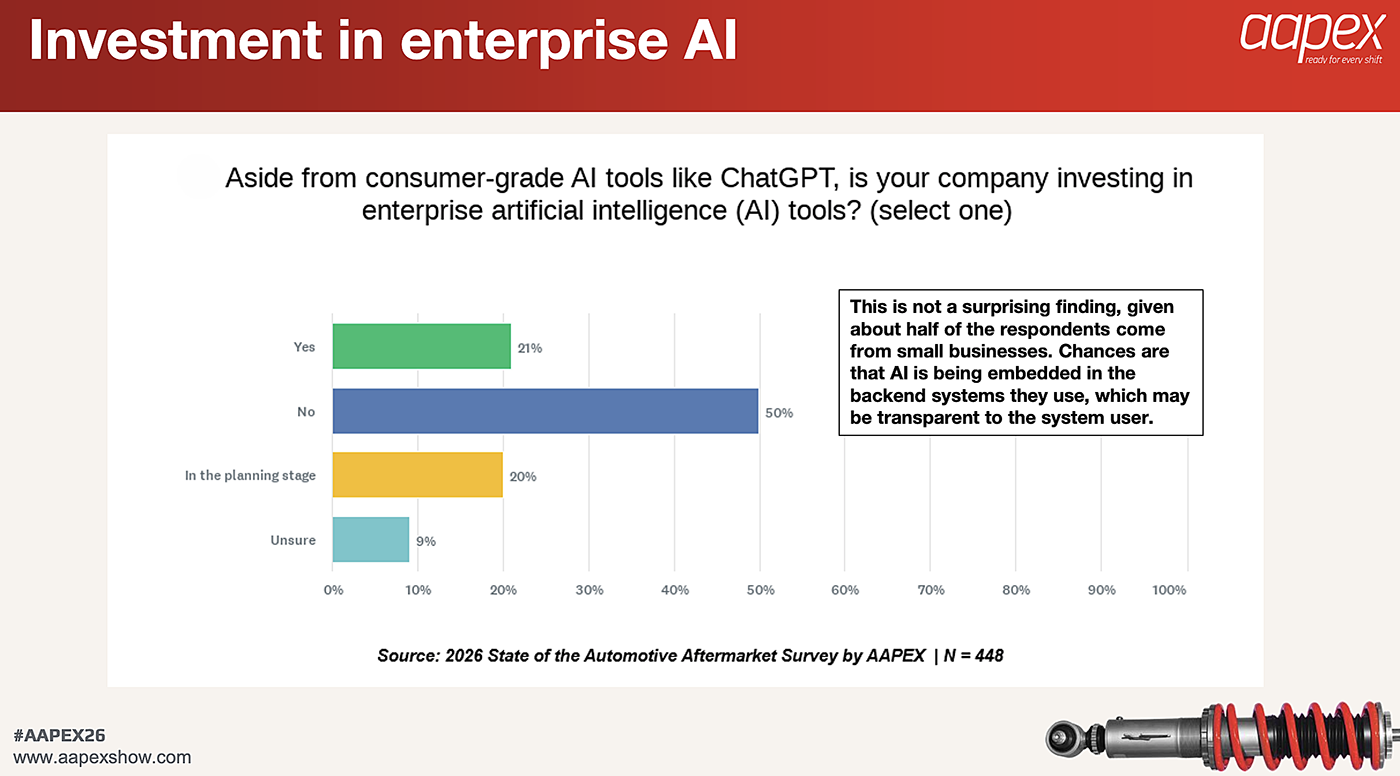
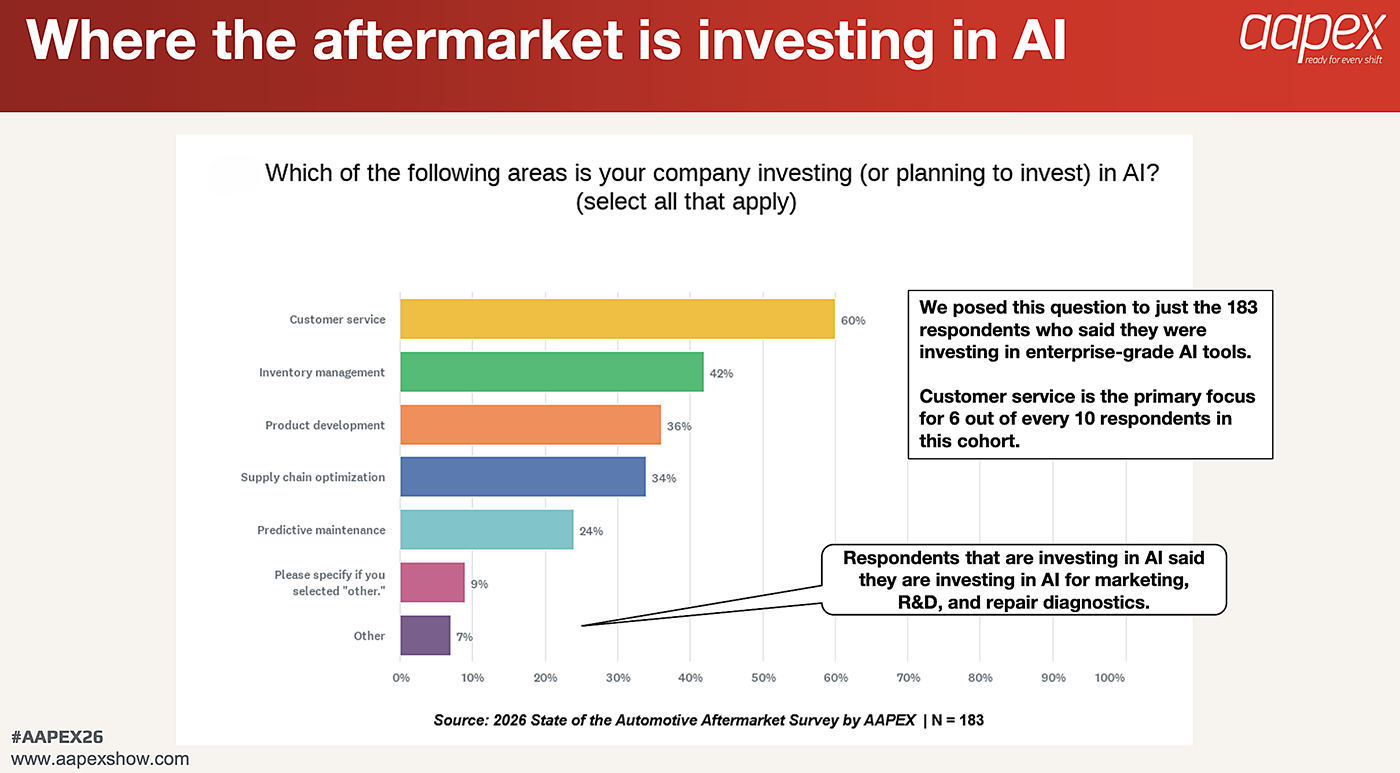
- Modest AI initiatives. 21% of respondents have implemented enterprise-grade AI tools and another 20% are in the planning stages. Of those implementing enterprise AI, the top areas of AI investment are customer service (60%), inventory management (42%) and product development (36%).
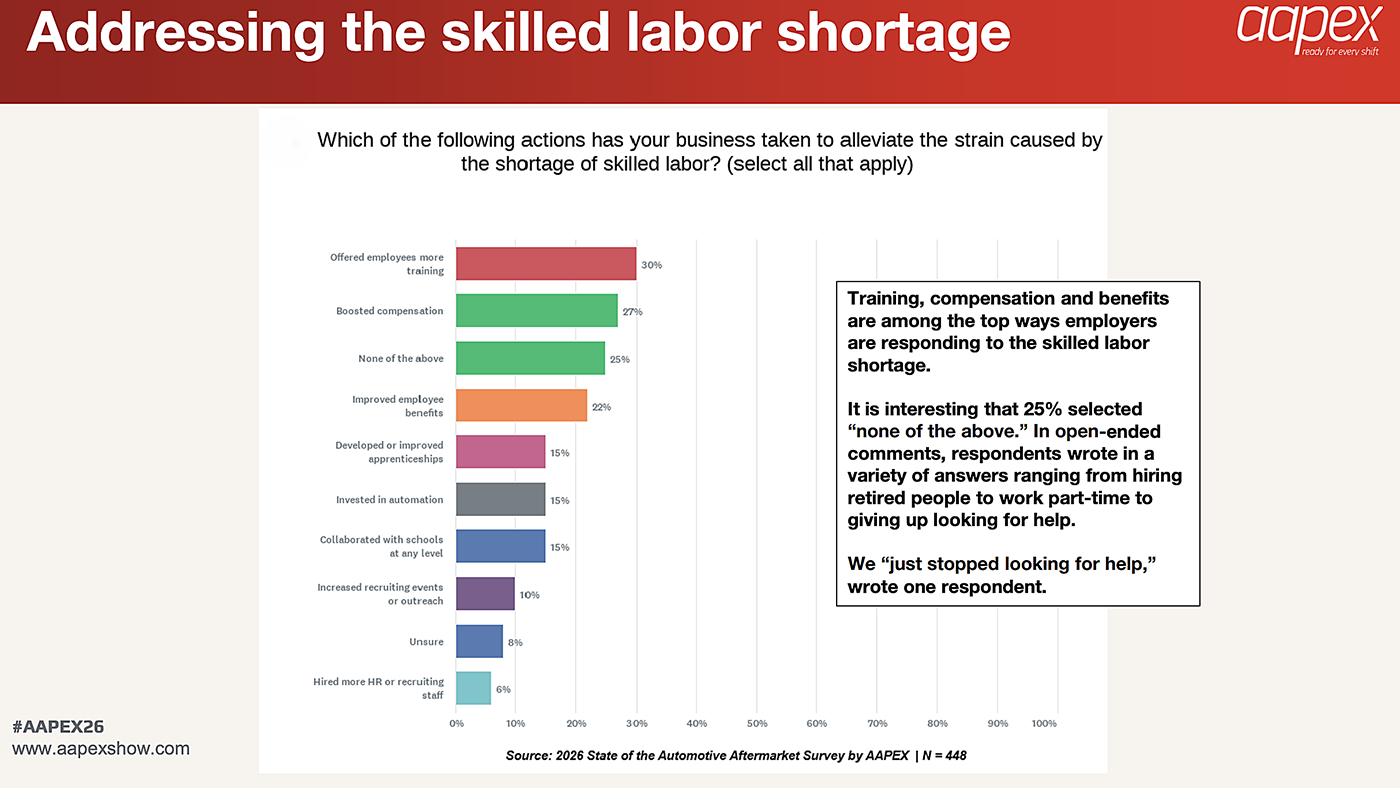
- Addressing the skilled labor shortage. The most common actions respondents said they are taking to attract talent are offering more training (30%), boosting compensation (27%) and improving benefits (22%). However, one-quarter aren’t taking any of those actions. One respondent commented [that we] “just stopped looking for help.”
The full report is freely available for download (no registration required) on the AAPEX blog: 2026 State of the Automotive Aftermarket Survey Report.








Comments are closed.