
Introduction follows the completion of a four-year exclusivity agreement with The Boyd Group and its 1,300 locations across the U.S. and Canada
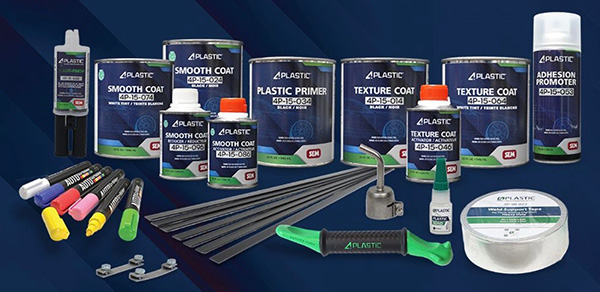
Lake Oswego, Ore.—4Plastic has announced the official launch of its filler-free plastic repair process and specialty product range this week in the United States and Canada. This follows the completion of a four-year exclusivity agreement with The Boyd Group, one of the world’s largest collision repair operators, with approximately 1,300 locations across the United States and Canada.
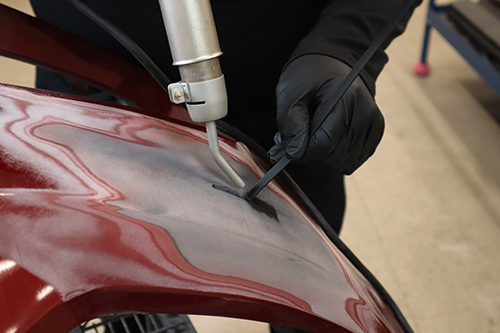
Managing Director of 4Plastic Michael LoPrete said that conventional plastic repair approaches rely heavily on fillers and cosmetic reconstruction. “4Plastic’s patented, filler-free technology restores polypropylene parts through precisely controlled heat, targeted push reshaping, and seamless fusion welding using an automotive-grade material engineered to bond perfectly with the original substrate.”
Key benefits include:
- Elimination of filler materials and applications.
- Improved durability and long-term performance.
- Reduced rework, comebacks, and warranty exposure.
- Lower material costs and reduced waste.
- Support for OEM-aligned repair and consumer safety outcomes.
By preserving material integrity and structural behavior, LoPrete said repairs are designed to perform as intended by OEM design, which is particularly important for modern bumper systems and safety-related plastic components.
“This is not a new or experimental concept,” he noted. “Four years of exclusive deployment within The Boyd Group enabled us to refine, validate, and prove the technology at scale.”
The solution originated in Australia and has been used by MSOs across Australia, New Zealand, and Europe over the past decades. The 4Plastic range will be available in the United States and Canada through PPG’s SEM Products.
LoPrete said the launch supports the collision repair industry’s accelerating repair-first strategy, reducing unnecessary plastic part replacement, lowering landfill waste, and improving repair economics through reduced material spend and cycle time.








Comments are closed.